Last updated November 17, 2026


Free written scope consultation - allowances, timeline, and change-order rules on paper before a single trade is scheduled
Kitchen Remodeling Warning Signs Every Homeowner Should Know
If you want to know whether a kitchen remodel will go sideways, start reading before the first cabinet comes out of the box. The single strongest predictor of a dispute isn’t the contractor’s craftsmanship – it’s whether the original contract included a detailed, itemized scope of work. Contracts without one are roughly three times more likely to end in a change-order fight over money nobody agreed to. In our experience across Huntington Beach, the projects that stay calm are the ones where the paperwork was boring and specific. This guide teaches you to audit the paper, the payment schedule and the communication habits, not just the tile.
Quick Answer
The clearest warning signs of a kitchen remodel gone wrong are vague contract language (“time and materials,” “plus cost of unknowns”), a payment schedule that asks for more than 10% before demolition, missing itemized scope, and a contractor who won’t put an arrival window or a written price on paper. Fixed stages and cabinet boxes installed before flooring or level-check are confirmed are red flags you can catch weeks before any visible damage appears.
Styles & brands we work with
- Kitchen remodeling
- Bathroom remodeling
- Home additions & ADU
- Roofing
- Windows & doors
- Driveway & pavers
- Fence
Table of Contents
- Scope of Work vs. Quote vs. Contract: What’s the Difference?
- Contract Language That Should Never Appear in a Kitchen Remodel
- What a Legitimate Payment Schedule Looks Like
- Mid-Project Warning Signs Specific to Kitchens
- Three Questions to Ask Before You Sign
- Huntington Beach Context: Climate, Code and Common Kitchen Failures
- What a Kitchen Remodel Should Cost, and What Drives It
- What a Written Guarantee Actually Covers
Scope of Work vs. Quote vs. Contract: What’s the Difference?
Most homeowners use these three words interchangeably. They’re not the same document, and each one protects you at a different level.
- A quote is a price for a defined set of items. It tells you what that number covers, and usually what it doesn’t.
- A scope of work is the itemized list of everything that will be built, removed, installed and finished – cabinet lines by brand and model, countertop material, fixture makes, tile, paint, door style, trim, disposal, electrical rough-in, permits, dumpster, protection of adjacent rooms. If it’s not written down, it’s not in the price.
- A contract is the legal agreement that ties the quote to the scope, sets the payment schedule, fixes the start and finish windows, and names the guarantee.
A quote without a scope is a number you’ll fight over later. A contract that references a scope is the only document that actually protects you. When we sit at a kitchen table in Huntington Beach and someone hands us a one-page bid with a lump sum and a “materials billed separately” line, we always ask to see the scope. There rarely is one.
What a strong scope looks like in practice: “Install 30 linear feet of KraftMaid Vienna maple cabinetry in the natural finish, six base and four wall units, soft-close, three drawers per base.” That’s specific. “Install new cabinets” is not. Also confirm whether permits and dumpsters are inside the number. Half the surprise costs we hear about come from items that were technically excluded because nobody wrote them in.
Take the time to compare two contractors side by side by the scope, not the number. A lower bid with three exclusions can cost more than a higher bid with none. Our Kitchen Remodeling in Huntington Beach page walks through what a full scope typically includes for a local job.
Contract Language That Should Never Appear in a Kitchen Remodel
Certain phrases in a kitchen contract are warning lights. Here’s what to look for and what a real limitation looks like instead.
- “Time and materials.” This means you pay for whatever the clock eats and however many boxes of material get used, with no ceiling. On a kitchen, that can mean thousands of dollars in unknowns with nobody accountable for the total. A written, fixed-price scope is the alternative.
- “Plus cost of unknowns” with no defined trigger. Unknown plumbing or a rotted subfloor needs to be handled, but a legitimate contract names who bears the risk, what the cap is, and how it gets approved in writing. A blank check is not a limitation.
- “Subject to change upon inspection” without defined conditions. If the contract can move based on invisible conditions, it isn’t fixed. Ask what specific conditions permit a change, how it will be documented, and what the cap is.
- “Contingency” as a vague percentage with no stated use. A real contingency is a specific dollar allowance for a specific category (for example, “structural repair allowance: $2,000”) and gets reconciled at the end.
The refrain we hear most from burned homeowners is a variation on “the number changed at demo day.” It changed because the contract permitted it. That’s why a written price before work starts is the single most powerful clause on the page – the number on day one is the number on the invoice. If a contractor won’t put a fixed price in writing, that tells you something.
What a Legitimate Payment Schedule Looks Like
The payment schedule is where a lot of trouble starts, and it’s easy to audit before you sign. Rules of thumb:
- A small deposit is normal – typically enough to reserve the job and order material. A deposit of 10% or less before demolition is a reasonable benchmark.
- Money should be tied to milestones that actually happen, not to a calendar date. “Cabinet installation complete” or “countertop templated and set” are real milestones. “Week three” is not.
- You should hold back a meaningful final payment until punch list and inspection are done. A 5-10% retention until the kitchen is functional and inspected is standard.
- Any request for more than 10% before demo deserves a direct, calm question: “What is this payment for, and what specific materials or work does it release?” A qualified contractor will answer easily. A less qualified one will deflect.
Also watch for a schedule that front-loads everything and leaves nothing for the finish. That structure creates a scenario where the crew walks if the last check is delayed – or worse, where the job stalls with half-cabinets and a tarp. Demand the schedule in writing, tied to milestones, and make sure the final payment is contingent on a signed walkthrough.
If you’re remodeling a kitchen at the same time as other rooms, line up the payment schedules so you’re never funding two stages ahead of where the work actually is. Our team coordinates that sequencing as part of daily scheduling on Penhallow Remodeling Huntington Beach home projects.
Mid-Project Warning Signs Specific to Kitchens
Some of the clearest signs of trouble show up mid-job, weeks before you’ll see the failure itself. Here’s what to watch for on a kitchen specifically.
- Cabinet boxes going in before flooring decisions are confirmed. Ordering and installing cabinet boxes before the finished floor height, transition strips and door clearance are locked in causes short doors, lipping thresholds and doors that won’t swing over rugs. Kitchens get torn apart over that detail.
- Countertop templating scheduled before cabinets are level-checked. Templating uses the actual cabinet footprint as the pattern. If the cabinets are not plumb, level and secured first, the slab comes back with gaps and misaligned seams. Any countertop team should run a level check on cabinets before templating. Ours do, every time.
- Appliances delivered before rough-in is confirmed. A refrigerator that doesn’t fit the opening, a range hood that misses the vent, a dishwasher with no dedicated circuit – all traced to appliances ordered before the rough-in dimensions were verified. Kitchen rough-in and appliance cut sheets should be reconciled in writing before anything ships.
- No dust barriers or floor protection. In an occupied kitchen, a crew that doesn’t hang plastic and protect the floor isn’t planning for the finish. It’s a sign the job is being managed on the fly.
- Electrical and plumbing changes made “on the fly” with no change order. Every rough-in adjustment should be documented in writing. Verbal “we’ll sort it” adjustments are the seeds of a change-order argument.
Any one of these can be corrected. Three together usually means the job plan was never complete. On Huntington Beach kitchens we always sequence flooring decisions, cabinet setting, level checks, templating and appliance delivery as a written order-of-operations. A contractor who can’t produce that order before demo is a contractor to watch.
Three Questions to Ask Before You Sign
Ask these three questions in the meeting. A qualified contractor answers easily; a shaky one deflects.
- “Show me the written, itemized scope and the fixed price that matches it.” Follow up with “What is excluded?” A qualified contractor names the exclusions without hesitation. If they can’t separate what’s included from what’s not, they can’t price the job either.
- “What is the payment schedule, what are the milestones, and how much is held back at the end?” Then listen for whether the schedule tracks actual stages. If the answer is a percentage breakdown with no milestone names, ask for it in writing. It shouldn’t be a problem.
- “What happens if the work fails, and how do you handle a repair that comes back?” Every Penhallow project carries the 365-Day Done Right Promise: if something fails inside the guarantee period, we come back and fix it at no charge, and that’s covered in writing. A contractor who hesitates on this question is telling you something about what happens after they leave.
Ask the questions early, not at the second meeting. Ask them over the phone if you’d rather. A live person answers our lines around the clock at (888) 329-8145; nobody should land in a voicemail when they’re deciding whether to sign.
Huntington Beach Context: Climate, Code and Common Kitchen Failures
A kitchen here is a different build than a kitchen in Denver, and the local conditions show up in the warning signs you’ll see mid-project.
Coastal humidity and salt air drive cabinet and door performance. In Surf City, we regularly see cabinet box swelling and door delamination within 18 months on jobs where particleboard boxes were installed with minimal clearance to slab and no movement joints. Solid plywood boxes and full-overlay doors handle the marine environment better. So does paint with proper cure time – rushed paint in a humid garage-drying setup fails at the door bottoms first. We see a lot of that along the coastal blocks near Main Street and along Pacific Coast Highway.
Interior humidity swings around air conditioning mean doors and drawers move. A cabinet line that isn’t adjustable, hinges that don’t shim, soft-close sliders that don’t allow fine tuning – all of it shows up in the first six months. Also plan for countertop thermal movement. Slabs need to float slightly at the walls, and any team that rammed the backsplash tight to the slab will be back when it cracks. Cambria quartz and similar brands have their own quartz warranty, but a wrong install still voids it.
On the code side, kitchen work that alters electrical, plumbing or gas generally requires a permit, and kitchens on older slabs often need to open and repair drain lines. Check with the city about requirements before work starts – any qualified contractor should pull the permits and pass the inspections on your behalf. And confirm whether your property is in an HOA with specific remodel rules, especially in the neighborhoods around Seacliff and the Bolsa Chica area where architectural review is common.
One more local note: we have worked on plenty of homes in Huntington Beach where the kitchen was last touched in the 1990s. Those kitchens often hide undersized electrical circuits and galvanized supply lines. A true scope of work should call out a verification step before demolition, so any surprises are documented and priced with your sign-off. That’s part of the plan, not an excuse after the fact. If you need to coordinate a kitchen with a nearby bath project, our Bathroom Remodeling in Huntington Beach team can sequence the schedules so trades aren’t tripping over each other.
What a Kitchen Remodel Should Cost, and What Drives It
A mid-range kitchen remodel in Huntington Beach typically runs $28,000 to $75,000, with the range driven by size, cabinet grade and whether the layout moves. A smaller cosmetic refresh – doors, countertops, paint – can land closer to $18,000 to $30,000. A full gut with new electrical, plumbing relocations, custom cabinetry and a premium stone can exceed $90,000.
| Category | Typical Range (Huntington Beach) | What Moves It |
|---|---|---|
| Cabinets | $8,000 – $28,000 | Stock vs. semi-custom (KraftMaid, Wellborn), layout changes, soft-close, drawer count |
| Countertops | $3,000 – $9,000 | Cambria, Silestone, Caesarstone vs. laminate; edge profile; seam count on slab |
| Appliances | $3,000 – $12,000 | Chef-style vs. standard, ventilation, refrigerator dimensions vs. opening |
| Plumbing and electrical | $2,000 – $8,000 | Relocated sink, added circuits, gas range line, ventilation upgrades, permit scope |
| Flooring | $2,500 – $7,000 | Tile vs. LVP, subfloor repair, transition heights at cabinet line |
| Labor and permits | $6,000 – $15,000 | Extent of tile work, paint, trim, site protection, demo, dumpster, inspection fee |
Anyone presenting a single lump sum without that level of breakdown should be asked for one. If cabinet line, countertop material and appliance allowances aren’t named in writing, the price will move. We won’t start a kitchen until the number is written down and the line-by-line matches. That’s the standard under The Kingswell Way: say the price before the work, show up in the window we gave, and leave the place cleaner than we found it.
If you need help comparing a kitchen scope to a whole-home plan, our General Contractor in Huntington Beach team handles coordinated remodel planning.
What a Written Guarantee Actually Covers
A guarantee isn’t a slogan – it’s a specific, stated remedy. Read it like a contract clause.
- Duration. Ours runs 365 days from completion under the Done Right Promise. Know the number.
- What’s covered. Workmanship failures should be named: cabinet doors that don’t operate, caulk and grout failures, countertop alignment, plumbing connections installed on the job, electrical work installed on the job.
- What’s not covered. Material defects from manufacturers usually carry their own warranty – a Cambria quartz countertop has its own quartz warranty – so understand both layers so you know which one applies.
- The remedy. Does it say “we fix it at no charge” or only “we’ll take a look”? Ours says we come back and make it right at no charge, and if a repair fails, the return visit is free – no service call, no re-inspection fee.
- It’s in writing on every project. If a contractor’s guarantee exists only in the conversation, it doesn’t exist. Ask for the document.
We also only quote product brands with their own warranty coverage, so you’re covered twice: once by the manufacturer and once by us. KraftMaid and Wellborn cabinetry, Cambria, Silestone and Caesarstone counters, and Kohler and Moen fixtures all carry their own coverage alongside ours.
Common Mistakes to Avoid
- Comparing bids without comparing scopes. Two numbers against the same room can look comparable and be nothing alike. Ask for the itemized scope for each bid and read them side by side – the lowest number with three exclusions often costs more.
- Paying more than 10% before demo without a clear reason. A large pre-demo payment ties up your money on a job no one has started. Ask what that payment releases and get the schedule in writing.
- Letting flooring and cabinet decisions drift. Kicking the finish-floor decision into week three causes door clearance and transition problems. Lock the height and material before material is ordered.
- Skipping the level check before countertop templating. It takes fifteen minutes and saves a redone slab. Ask every contractor to put level-check in writing as a step before templating.
- Assuming the permit isn’t needed in Huntington Beach. Kitchens with electrical, plumbing or gas work almost always need one, and skipping it comes back at resale or inspection. Confirm who pulls it and who is on site for the inspection.
- Accepting a verbal arrival window. “Sometime next week” is not scheduling. Written windows are a real scheduling commitment, and they’re part of our standard.
- Ignoring coastal humidity in the specification. Cabinets and paint made for a dry climate will fail on the coast. Confirm cabinet box construction, paint cure time and movement joints at the cabinet line before signing.
See the difference
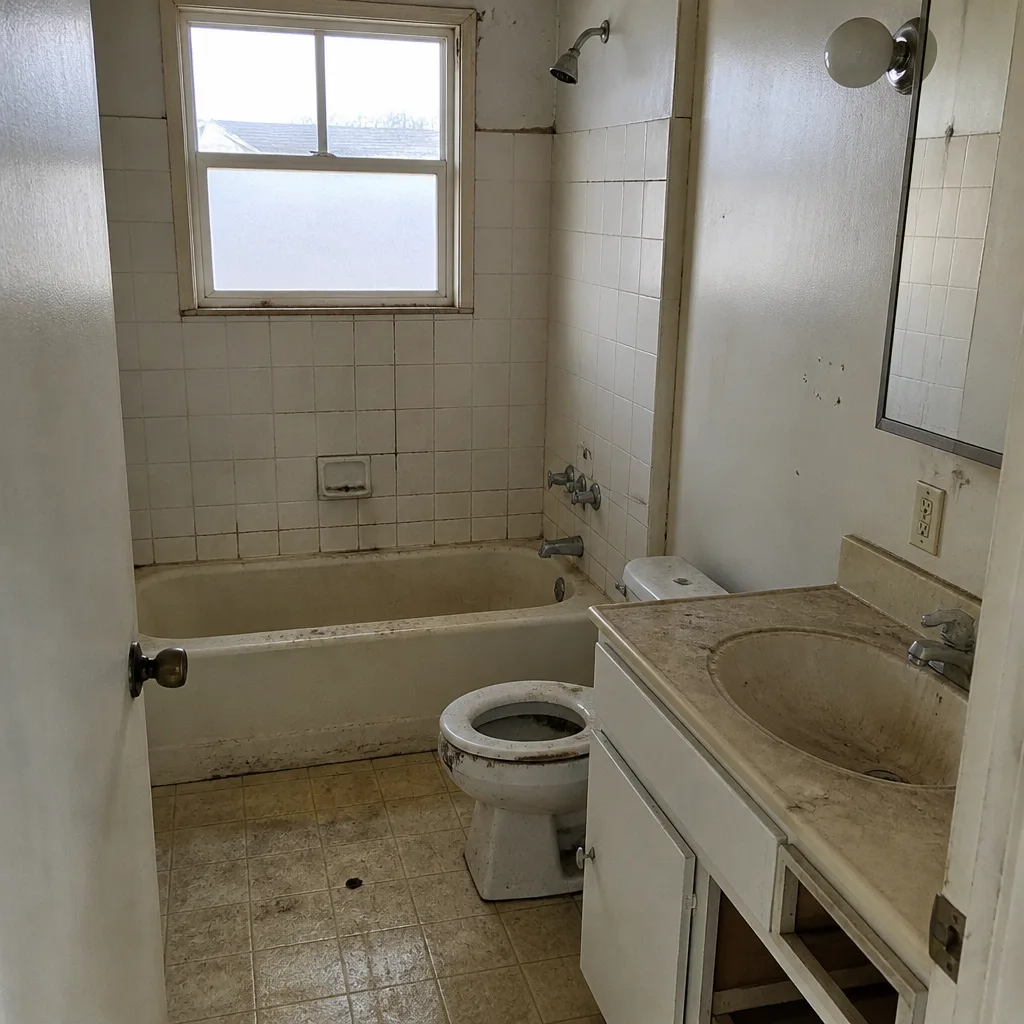 Before
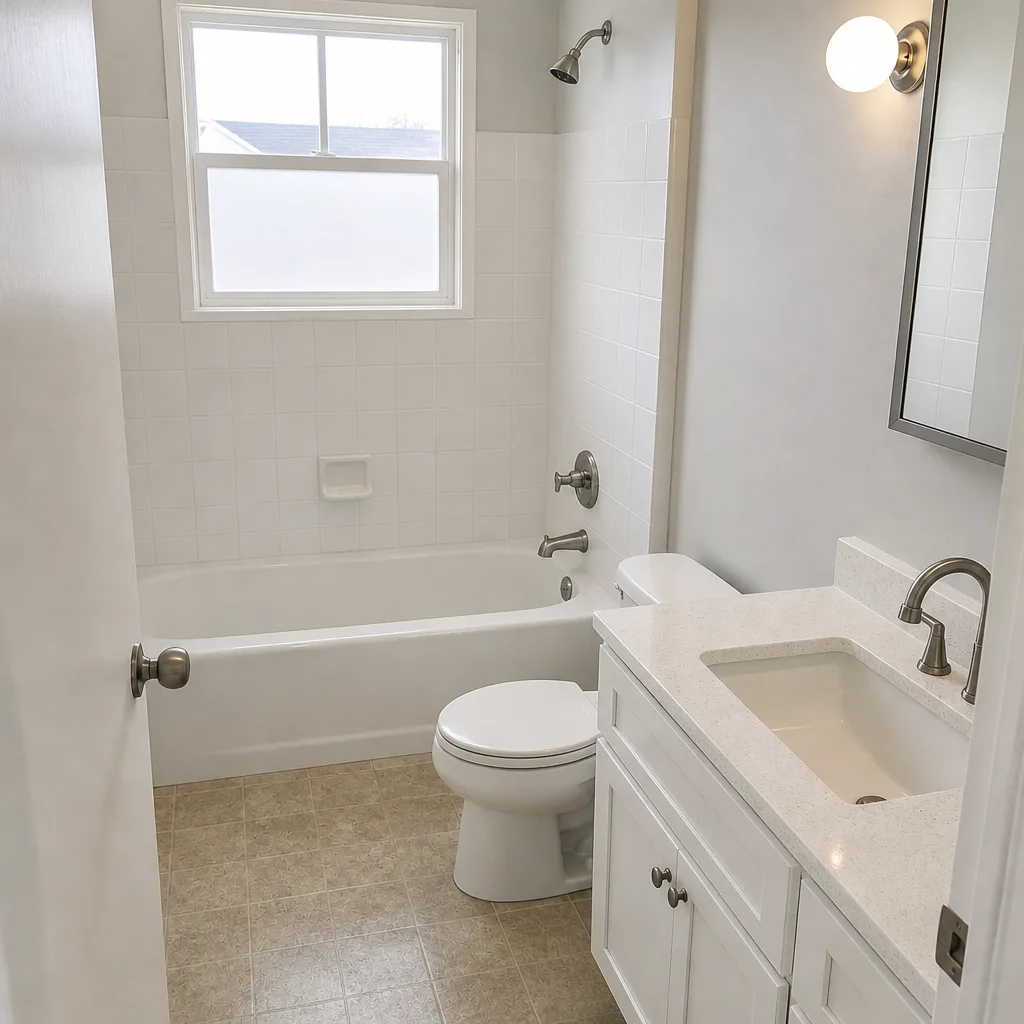 After
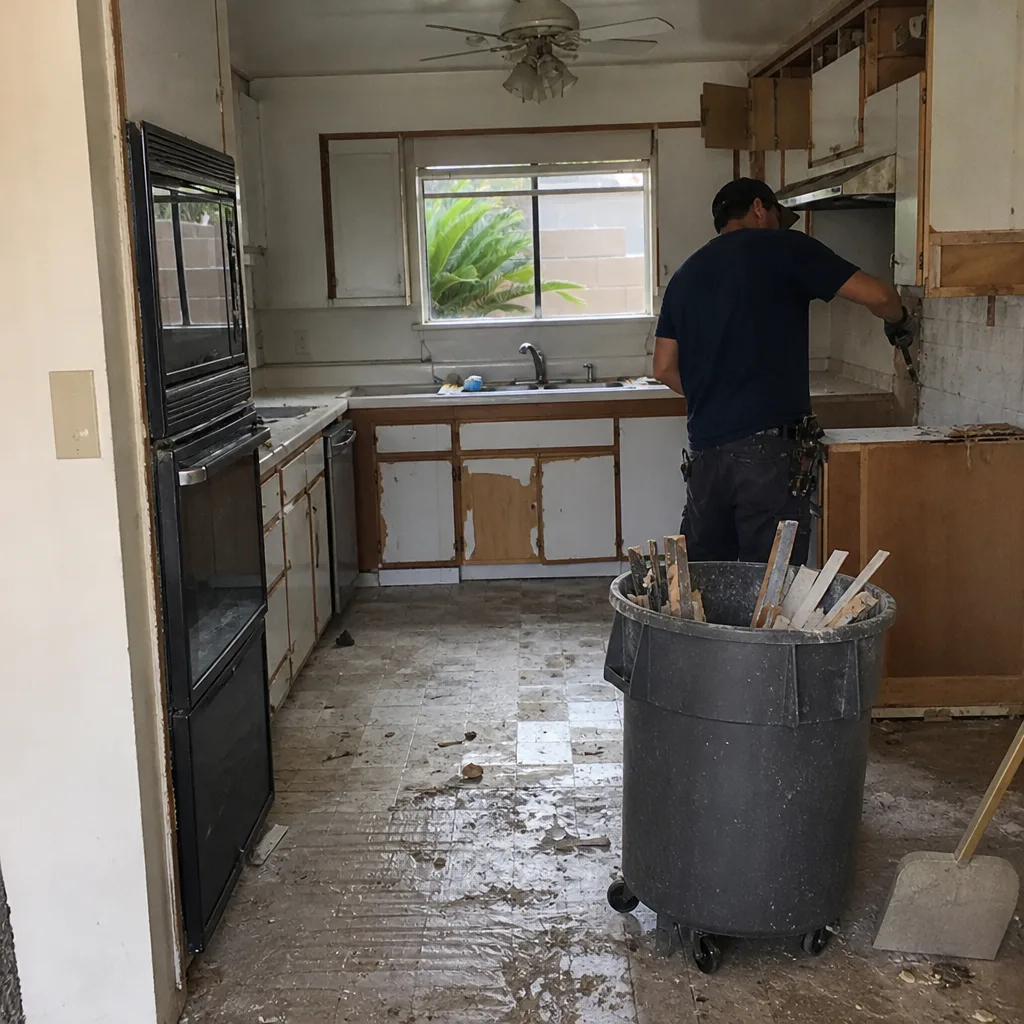 Before
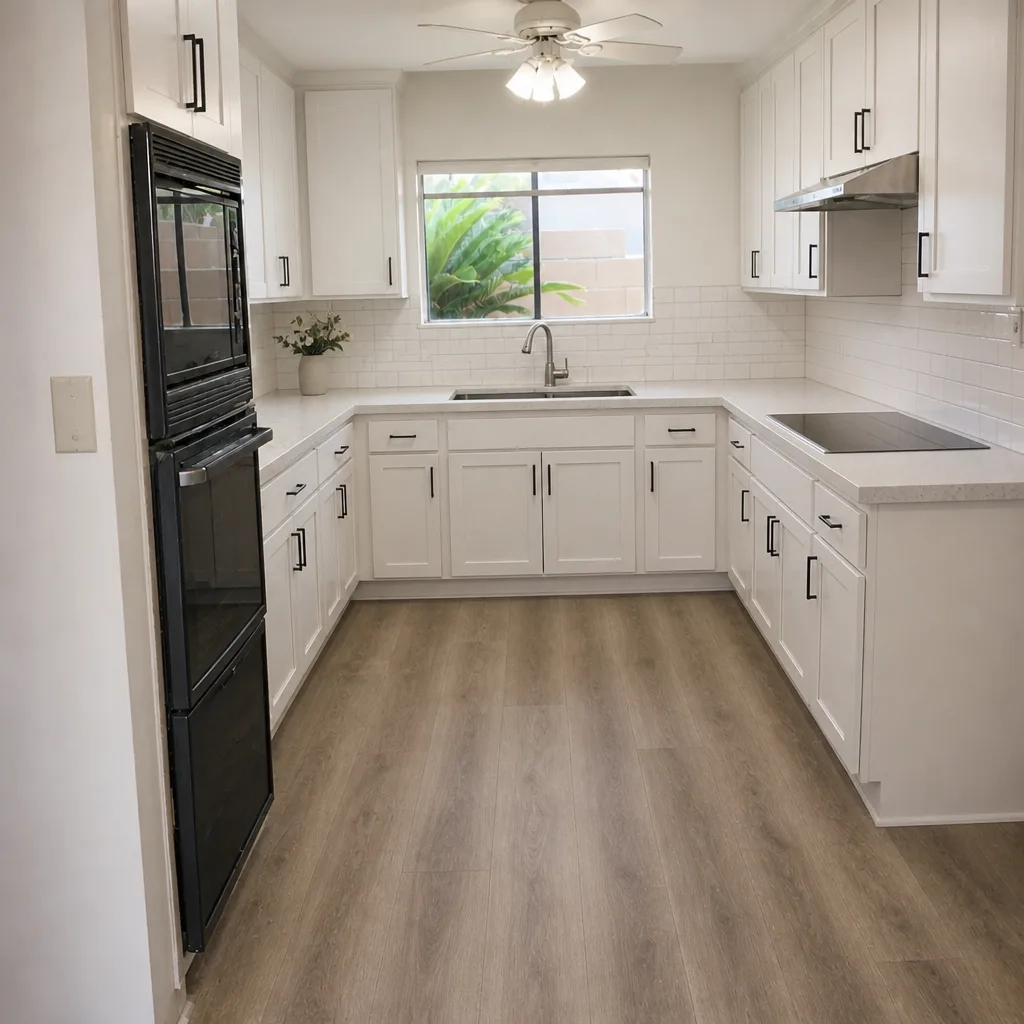 After
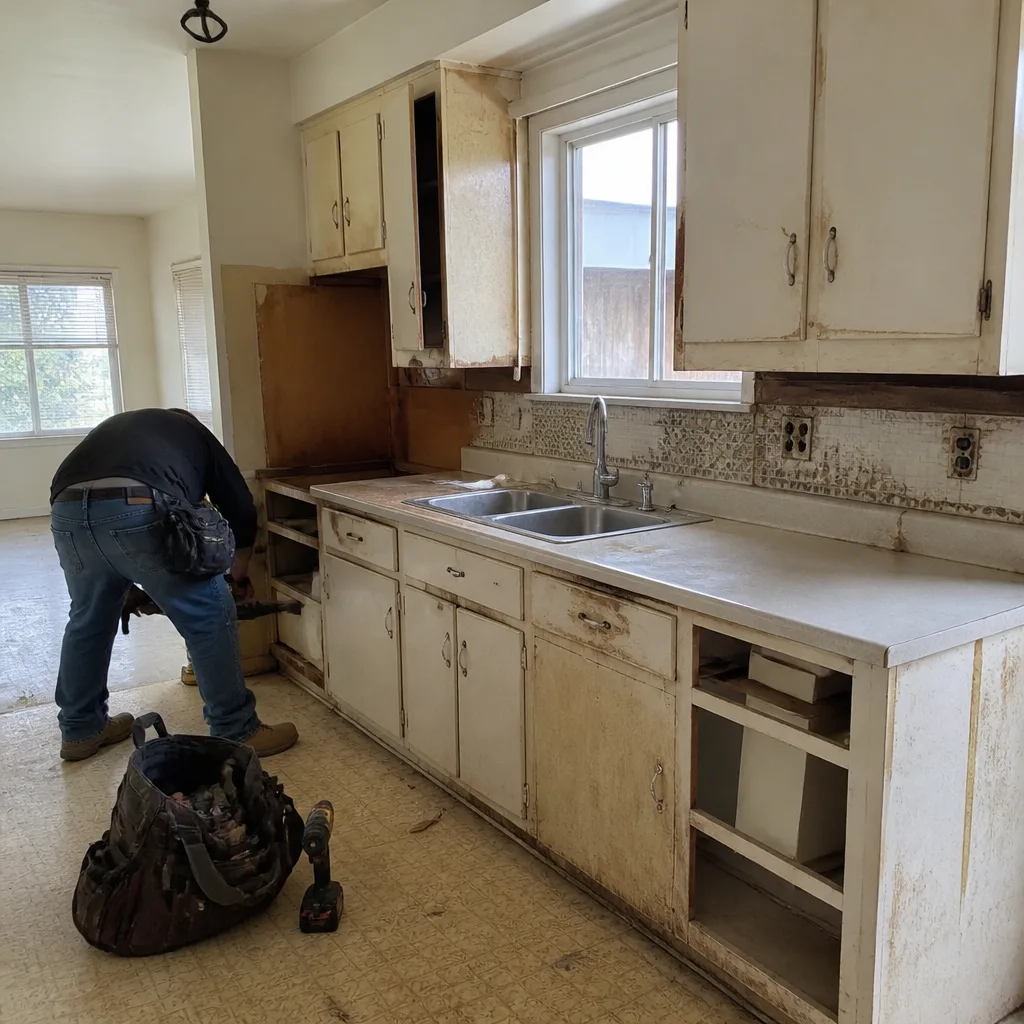 Before
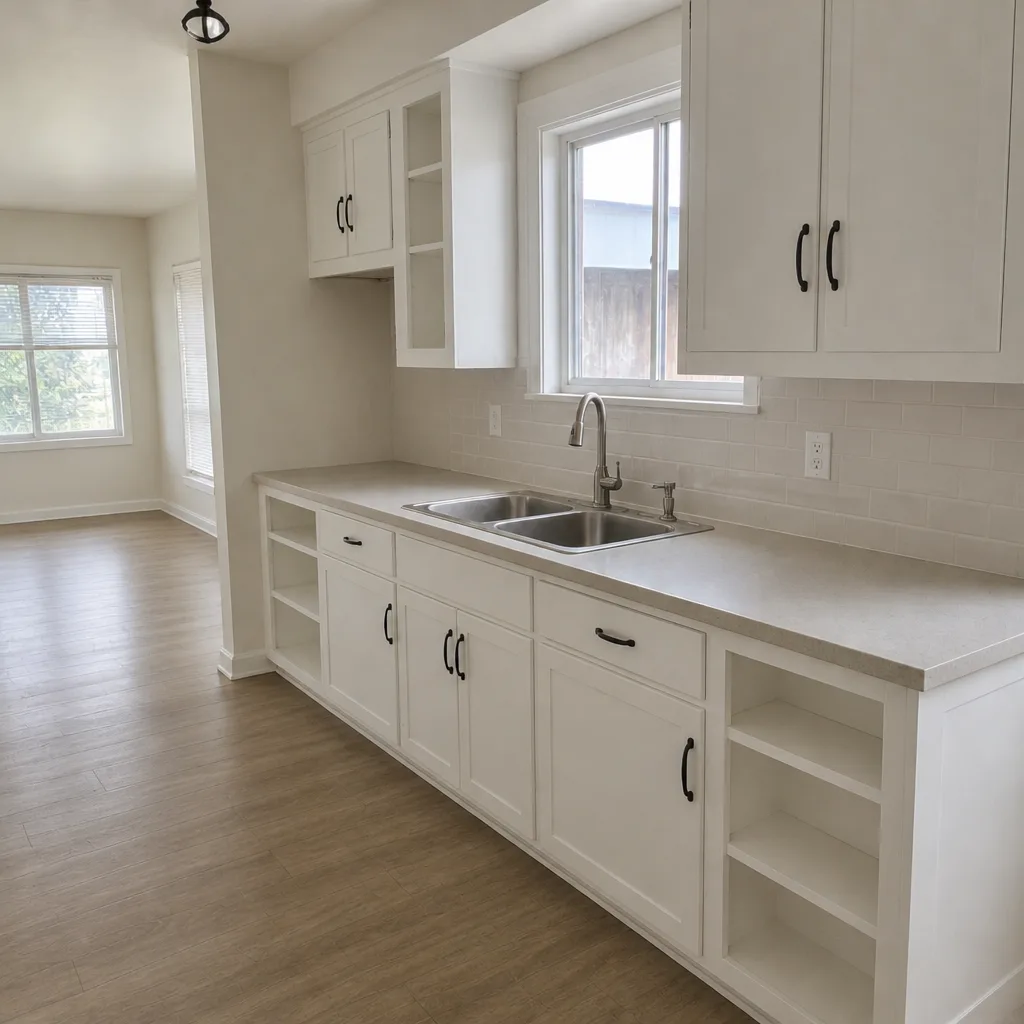 After
When to Call a Professional
Some situations are past the point of self-diagnosis. Call a professional if a contractor has started your kitchen without an itemized scope or a written payment schedule, if payments have been made but cabinets aren’t set, if the countertop has been templated while cabinet boxes are visibly out of level, or if appliances were delivered before the rough-in dimensions were confirmed. Also call if a previous remodel left gaps, misaligned seams, drafts at the exterior wall or visible moisture at the sill or cabinet base – that’s usually a waterproofing or framing problem, not a paint problem. Penhallow Remodeling Huntington Beach offers free estimates in Huntington Beach. Call (888) 329-8145 to get a written scope and a fixed price in your hands before you sign anything.
Frequently Asked Questions

The biggest warning sign is a missing itemized scope of work. A contract without one is the single strongest predictor of a change-order dispute, because nobody has written down exactly what is being built, what materials are being used, or what’s excluded from the price. Ask for the itemized scope before signing, and confirm the price matches it.
A mid-range kitchen remodel in Huntington Beach typically runs $28,000 to $75,000, with a cosmetic refresh closer to $18,000 to $30,000 and a full gut with custom cabinetry and premium stone often exceeding $90,000. Cabinet grade, countertop material and whether the layout moves drive most of the range. Call (888) 329-8145 for an exact quote – estimates are free.
Time-and-materials contracts are rare for full kitchens because they offer no ceiling on cost. They can make sense for small service work or emergency repairs, but for a full kitchen remodel, a fixed-price scope protects you far better. If a contractor insists on time and materials, that tells you they can’t commit to a number before work starts – ask why.
A normal schedule keeps the deposit at 10% or less before demolition, ties each further payment to a completed milestone (like cabinets set or countertops installed), and holds back 5-10% until the punch list and inspection are done. Any request for more than 10% before demo deserves a direct question about what the payment releases. If the answer is vague, ask for the milestone schedule in writing.
Yes, we pull the permits and stay on site for the inspections on every kitchen that involves electrical, plumbing or gas work. Permit and inspection fees, plus the dumpster and job site protection, are itemized in the written scope so you can see exactly what you’re paying for. If a contractor asks you to pull the permit yourself, that’s worth questioning out loud.
If workmanship fails inside the 365-day Done Right Promise, we come back and fix it at no charge, and that is covered in writing on every project. Materials have their own manufacturer warranties – Cambria, Silestone or Caesarstone counters, for example, carry their own coverage – and we walk you through both layers so you know which applies. Call (888) 329-8145 if something isn’t right and we’ll schedule a return visit.
The Bottom Line
The paperwork is where a kitchen remodel wins or loses. Before you sign anything, insist on an itemized scope of work, a fixed price that matches it, a payment schedule tied to real milestones with money held back at the end, and a written guarantee that names the duration, the coverage and the remedy. Watch for time-and-materials language, “plus cost of unknowns” with no cap, and a deposit above 10% before demo. Watch mid-project for cabinet boxes going in before flooring is confirmed, templating scheduled before level check, and appliances delivered before rough-in. Huntington Beach kitchens face their own challenges – coastal humidity, salt air and older slabs – so a detailed scope matters even more here. We’ve watched enough kitchens come apart over unfixed paperwork to know the fix is easy and worth asking for before day one. That’s the point of a written price and a written guarantee: you get a number and a promise you can hold us to. If you’re planning a kitchen in Huntington Beach, call (888) 329-8145 and we’ll schedule a free estimate – we’ll bring a scope of work you can read.
Written by the team at Penhallow Remodeling Huntington Beach.