
Last updated November 17, 2026






Free written scope consultation - allowances, timeline, and change-order rules on paper before a single trade is scheduled
Kitchen Remodeling Maintenance Schedule: What to Do and When
Here’s the part of a kitchen remodel nobody tells you about in the showroom: cabinets on the California coast age on a different clock than cabinets inland. Huntington Beach homes sit close enough to the water that salt air settles on every surface, and a west-facing kitchen window can push interior surface temperatures well past what a manufacturer tested for. Most care sheets tucked inside a new cabinet box were written for a dry, inland climate. Follow one of those routines and you’ll tidy things, but you won’t protect the finish. What follows is a real maintenance calendar built for a coastal kitchen, plus a printable checklist you can tape inside a cabinet door.
Quick Answer
A coastal kitchen needs three maintenance rhythms: a monthly wipe-down and inspection of cabinet faces, appliance clearances and silicone joints; an every-six-month check of grout, caulk and hinge hardware; and an annual deep task that includes resealing natural stone, re-oiling wood, and touching up painted cabinet edges. Skip the schedule and the salt air, cooking grease and sun exposure speed up finish wear. Stick to it and a remodeled kitchen in Huntington Beach holds up for years longer.
Styles & brands we work with
- Kitchen remodeling
- Bathroom remodeling
- Home additions & ADU
- Roofing
- Windows & doors
- Driveway & pavers
- Fence
Table of Contents
- Why Coastal Kitchens Need Their Own Schedule
- The Monthly Routine: 20 Minutes That Saves a Finish
- Cabinet Finish Care by Type: Painted, Stained and Thermofoil
- Grout vs. Caulk: Two Joints, Two Care Intervals
- Appliance Clearance and Hinge Adjustment
- The Six-Month Check: What to Look For
- The Annual Deep Task List
- Printable Maintenance Checklist
Why Coastal Kitchens Need Their Own Schedule
Walk into any hardware store and the cabinet care sheet says the same thing whether you live in Ohio or two miles from the pier: dust weekly, avoid abrasives, apply a wax every few months. That advice isn’t wrong, it’s just incomplete for a Huntington Beach kitchen. Three forces here work against a new finish at once, and the generic sheet accounts for none of them.
Salt air. Airborne salt is mildly corrosive and slightly hygroscopic, meaning it pulls moisture toward it. On metal hardware, hinges and drawer glides, that shows up first as a dull film, then as stiffness or pitting. On painted cabinet faces near the room’s high-traffic zones, it leaves a tacky residue that traps cooking grease and dust into a residue that’s harder to clean each month you leave it.
UV exposure. A south- or west-facing kitchen window in Huntington Beach gets strong afternoon sun most of the year. That light fades a stained cabinet finish unevenly, leaving the frames near the window lighter than the ones behind the island. Painted finishes can go chalky. Thermofoil can yellow.
Grease and humidity together. Cooking grease is airborne until it lands on a warm cabinet door, where it sets. Add the higher humidity near the coast and you have a film that grabs onto a finish and holds on. The rest of the schedule below exists to break that cycle before it takes hold.
The Monthly Routine: 20 Minutes That Saves a Finish
The most important monthly job is a simple one: a quick wipe and a look. Twenty minutes once a month will catch cabinet wear, loose hardware and failing joints while a fix is still cheap. In our experience, the homeowners whose kitchen still looks new at the five-year mark are the ones who did this and nothing more elaborate.
- Wipe cabinet fronts with a damp microfiber cloth and a mild dish soap solution. Work from the bottom of the door up so any drips don’t run down the length of the panel. Dry immediately with a second cloth. No wet left to sit.
- Clean the base of the cabinets, not just the visible faces. Grease runs down. Clean the bottom rail and inside the toekick where salt dust collects.
- Look at sealed countertop joints. Run a finger along the caulk joint where the counter meets the backsplash. If it feels crusty or cracked, mark it for the six-month visit.
- Check hardware. A loose handle is a two-minute fix with a screwdriver. Catch it before it strips the anchor.
- Pull the fridge and stove out a few inches. Vacuum the dust and grease behind them. In a coastal kitchen, this is where salt film builds unseen.
Nothing about the monthly job needs special products. In fact, the more aggressive the cleaner, the faster it eats into a factory finish. Skip ammonia-based glass cleaners on anything painted and skip abrasive pads entirely.
Cabinet Finish Care by Type: Painted, Stained and Thermofoil
How you maintain a cabinet finish depends on what’s on it. Three common finishes behave differently, and the UV vulnerability ranking matters more in Huntington Beach than most care guides acknowledge. Here’s the breakdown.
Painted finishes
Painted cabinets (often a sprayed factory or shop finish over a primer coat) show wear at the edges and corners first. Near a sunny window, they tend to go chalky and slightly flat as UV degrades the topcoat. Wipe with a damp cloth and mild soap, then dry. Every six months, a light coat of a non-silicone cream polish adds a barrier. Every year, inspect edges and touch up chips with a color-matched paint pen. Left alone, a chipped edge lets moisture under the finish and the chip grows. Painted finishes are the most UV-sensitive on the list.
Stained wood
Stained cabinets carry a tone plus a clear protective topcoat. UV fades the tone unevenly, so the frames nearest the window will lighten while the panels behind your island stay dark. This is why rotating what sits on the counter isn’t a fix; you can’t rotate the cabinets. The workaround is a quality UV-blocking wood conditioner applied yearly on the exposed faces, plus a plain wipe. If your stained cabinets face a sun window directly, consider a window film on that glass. A stained finish is the second most UV-vulnerable.
Thermofoil
Thermofoil is a thin vinyl-like laminate over an engineered core. It’s tough and easy to wipe, which is why it’s popular in rental-heavy areas near the coast. Its weakness is heat and edge peeling, not fading. Never place a hot pan or a slow cooker directly against it. Never wipe with solvent. When a thermofoil edge starts to lift, a small heat-set repair (a warm iron over a towel) can buy time, but call it early rather than after a corner curls. Thermofoil is the least UV-vulnerable of the three, but the most vulnerable to heat.
Whatever the finish, the material behind it matters for your baseline. When we install cabinetry in a Huntington Beach kitchen, we tend toward KraftMaid and Wellborn lines because their finishes carry their own factory warranties you can hold alongside ours.
Grout vs. Caulk: Two Joints, Two Care Intervals
Most people use “grout” and “caulk” interchangeably, then wonder why the wrong one fails. They’re not the same material and they don’t get the same maintenance.
Grout is a cementitious or epoxy mix that fills the joints between tiles. It’s rigid. In a Huntington Beach kitchen you’ll find grout in the backsplash field, behind the range, and where any ceramic or porcelain tile runs. Grout doesn’t move, so it doesn’t crack from a settling house as fast as caulk does. But it does stain. Cooking oil, coffee, tomato sauce and the fine salt haze that finds its way into every kitchen will discolor an unsealed cement grout within a year.
Caulk is a flexible silicone or acrylic sealant. It fills joints that move: where the countertop meets the backsplash, where the counter meets the cabinet, and around the sink edge. Caulk flexes, and that’s the point. But flex fatigues the material over time. A kitchen with a lot of natural sunlight and a lot of temperature swing (hot burner, cold counter) cycles that caulk joint several times a day.
These differences drive the intervals:
- Grout: reseal every 12 to 18 months. Epoxy grout can go 24 months. Never use a steam mop on cement grout, as it drives moisture in.
- Caulk: inspect every 6 months; reapply the sink and backsplash seam every 2 to 3 years in a coastal kitchen (shorter if the seam sits in a sun path).
- Never caulk over grout or grout over caulk. The right material goes in the right joint. Get this wrong and the joint fails within months.
If your countertop is stone, the stone itself may need a sealer schedule too. A quartz or engineered surface like Cambria typically seals at the factory and needs only a wipe, while a natural stone needs a yearly penetrating sealer. Match the maintenance to the material, not to the color.
Appliance Clearance and Hinge Adjustment
Two kitchen failures that cost hundreds to repair are free to fix when caught early, and both get worse faster in a humid, salty environment: appliance-to-cabinet clearance and door hinge alignment.
Clearance. Your fridge needs air space around it to release heat. If a cabinet panel sits tight against the side, the compressor works harder and the cabinet face takes the heat. In a Huntington Beach kitchen the cabinet may also take the humidity from the fridge’s condensation. Every six months, pull the fridge a few inches forward, vacuum the rear coils, and confirm there’s at least an inch of clearance on each side and two inches behind. A stove needs similar breathing room. If your oven’s ventilation hood recirculates (many do), cleaning the filter monthly is the single best favor you can do a kitchen finish, since it removes grease from the air before it lands.
Hinges. Cabinet hinges are usually adjustable in three directions: up-down, left-right and in-out. When a door starts to sag or catch, the fix is a screwdriver and five minutes, not a new door. Humidity weakens the wood fibers around a hinge screw over time. Here’s the sequence:
- Open the door and look for the hinge’s adjustment screws (usually two per hinge, often under a cap).
- Loosen the screws a quarter turn, nudge the door into alignment, retighten.
- Test the swing. If it still catches, check whether a screw is stripped rather than whether the hinge is bent.
- For a stripped screw, remove it, plug the hole with a toothpick and wood glue, wait an hour, then reinsert.
Blum and similar soft-close hinges are also adjustable for closing force. If a door slams, tighten the closing adjustment rather than ignoring it; the bang loosens the anchor over time.
The Six-Month Check: What to Look For
Twice a year, do a version of the monthly wipe with a longer attention span. This is when you catch the wear that the monthly look misses, especially in a Huntington Beach kitchen where salt haze and sun do their slow work between inspections.
- Caulk joints: press a fingernail lightly along the sink and backsplash seams. If it pushes into a soft spot or the edge has lifted, it’s time to cut it out and reapply.
- Grout lines: look for darkening, especially behind the stove. A toothbrush and a baking-soda paste is fine on a small stain; a widening graying suggests it’s due for a reseal.
- Cabinet finish edges: run a hand along the outside corners and bottom rails. Chips start as a rough edge. A touch-up pen on those edges now prevents a bigger repair.
- Drawer glides: pull every drawer. If it rubs or sticks, check for a loose screw or a track that needs a drop of silicone-based lubricant (not oil, which attracts dust).
- Countertop seal: for natural stone, drop a bead of water on the surface. If it beads up, the sealer is good. If it soaks in within a minute, reseal.
- Range hood filter: a clogged filter is the most common cause of grease coating a coastal kitchen’s upper cabinets. Replace or clean at the six-month mark.
This is also the window to call for a professional evaluation if something is moving that shouldn’t. A cabinet pulling away from the wall or a countertop with a new gap underneath usually means a bigger repair than a maintenance visit.
The Annual Deep Task List
Once a year, block out a day and work through the full routine. In a Huntington Beach kitchen, the annual deep task resets everything the monthly clean can’t reach. Here’s the sequence we recommend, keeping the material-specific work at the end so the kitchen is clean when it’s done.
- Empty the upper cabinets (you’ll want the doors open and empty for this). Wipe the interior with a damp cloth. Toss sticky shelf liners and replace them.
- Vacuum the full cabinet run including the toekick, the counter-to-cabinet joints, and the fridge and range rear. Salt film and grease settle there all year.
- Check every hinge and drawer glide using the adjustment sequence above. Adjust the soft-close tension on any door that slams.
- Reseal natural stone using a penetrating sealer. Let it cure the full time on the label, not half.
- Re-oil wood cabinetry or apply a finish conditioner to painted and stained cabinets in the sun-exposed zones only. Wipe off excess.
- Re-caulk any joint you flagged at the six-month check. Use a color-matched silicone at sinks and a paintable acrylic at painted-wood joints.
- Reseal grout if the water-bead test fails. Epoxy grout skips this step.
- Inspect the range hood and vent for grease buildup and clear any obstruction. A professional should handle anything behind the hood itself.
If any of those items were botched on a prior job and you’d rather not patch them again, that’s a fair reason to call us. A Kitchen Remodeling in Huntington Beach visit can tell you whether a repair will hold or whether you’re looking at a re-do.
Printable Maintenance Checklist
Print this once and tape it inside a cabinet door. No app, no QR code, no subscription.
Monthly
- Wipe cabinet fronts with damp microfiber and mild soap; dry immediately
- Clean the bottom rail and toekick
- Wipe down the grout backsplash with a damp cloth
- Check every handle for looseness; tighten
- Vacuum behind the fridge and range (do the pull-out or a hand vacuum)
- Clean the range hood filter
Every Six Months
- Press-test caulk at sinks and backsplashes
- Inspect grout for staining; spot-clean with baking soda
- Check cabinet edges for chips; touch up with matching pen
- Adjust hinges and drawer glides
- Pull fridge to clean the coils; confirm clearance
- Bead-of-water test on natural stone
- Replace or clean range hood filter to manufacturer spec
Annually
- Empty and wipe upper cabinets; replace liners
- Full vacuum of cabinet runs and appliance cavities
- Reapply finish conditioner to sun-exposed painted and stained faces
- Reseal natural stone countertops
- Re-caulk any flagged joint
- Reseal standard cement grout
- Have the range hood and vent professionally inspected
If you’re not sure what you’re looking at, a maintenance walk-through from a contractor is often free. If the work has grown past routine care into structural issues, a General Contractor in Huntington Beach visit is the next step.
Common Mistakes to Avoid
- Using the wrong cleaner on painted cabinets. Ammonia and degreasers strip the finish. A coastal kitchen is tempting to scrub, but a gentle soap and a damp cloth do the job without eating the finish.
- Caulking over grout, or grouting over caulk. These materials belong in different joints, and the wrong one fails in months. In a Huntington Beach kitchen with a lot of sun, the seam between counter and backsplash is the first place this shows.
- Skipping the sun-facing cabinets. The frames near a west window will fade faster than the rest. Most homeowners notice months after the color has already shifted.
- Waiting to fix a three-minute hinge issue. A loose hinge grinds the wood around the screw. Catch it early and it’s a screwdriver fix; catch it late and it’s a cabinet repair.
- Letting the range hood filter clog. Every month you leave a grease filter clogged, the grease that would have vented off lands on the cabinet above. In a coastal kitchen it bonds to the salt film and is much harder to remove.
- Using steam on standard grout. Steam drives moisture into cement grout and pushes it to the back. Use a damp mop, not a steamer.
- Treating the maintenance schedule as optional for the first year. The first 12 months set the finish for the next ten. A brand-new Huntington Beach kitchen still needs the monthly wipe from day one.
See the difference
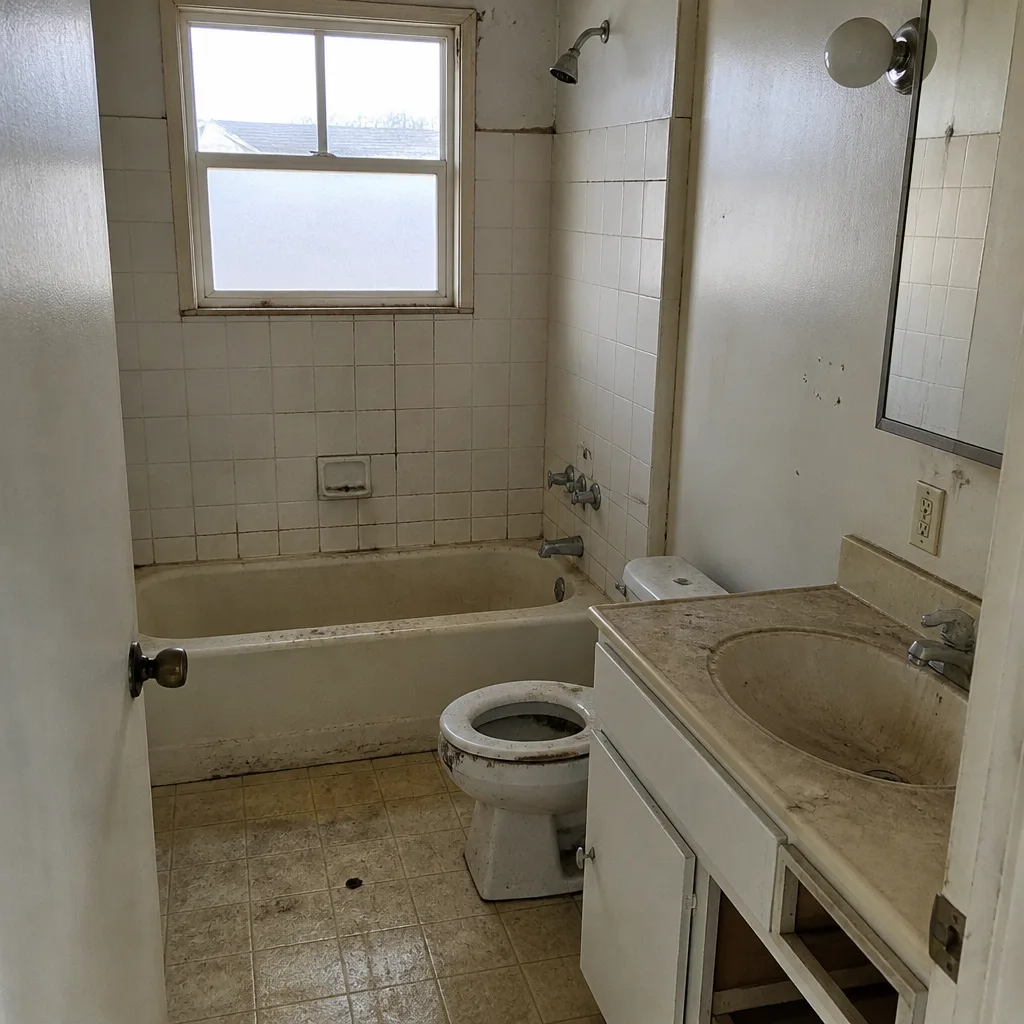 Before
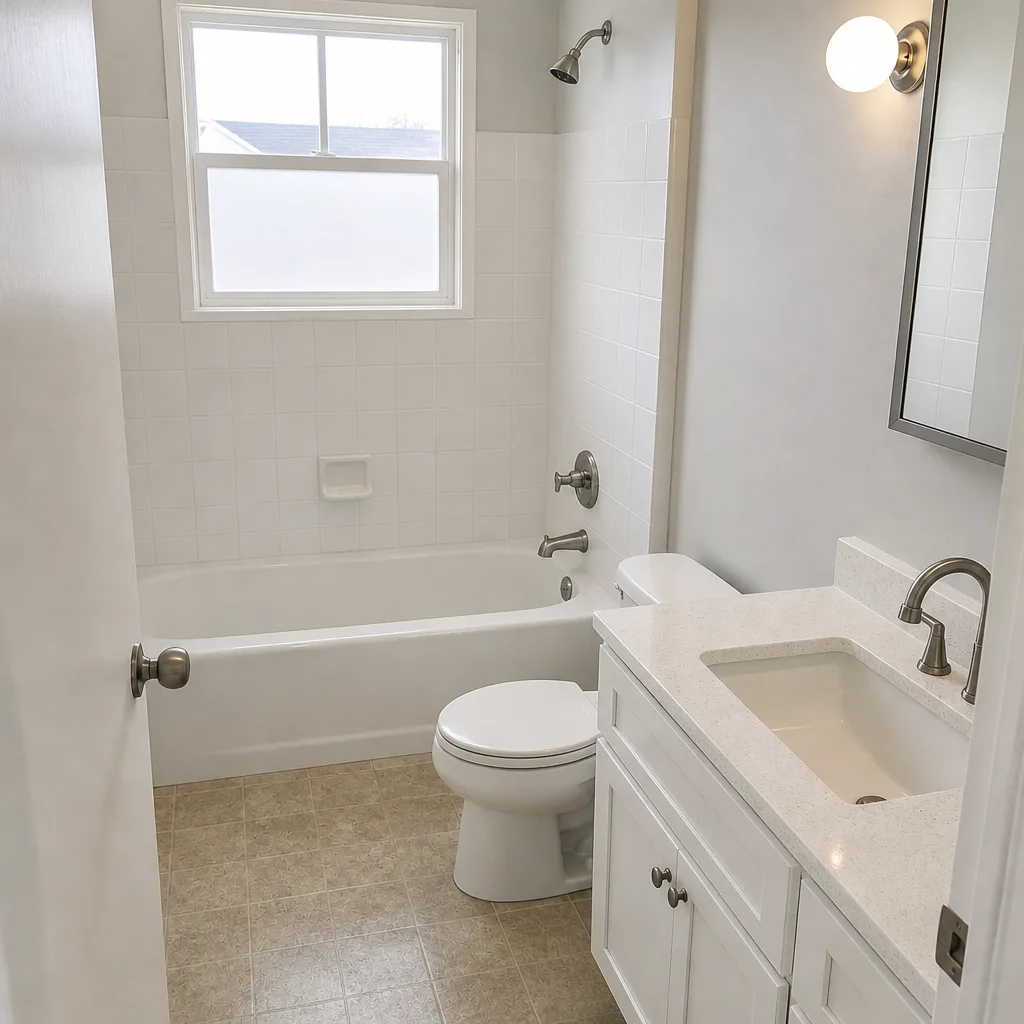 After
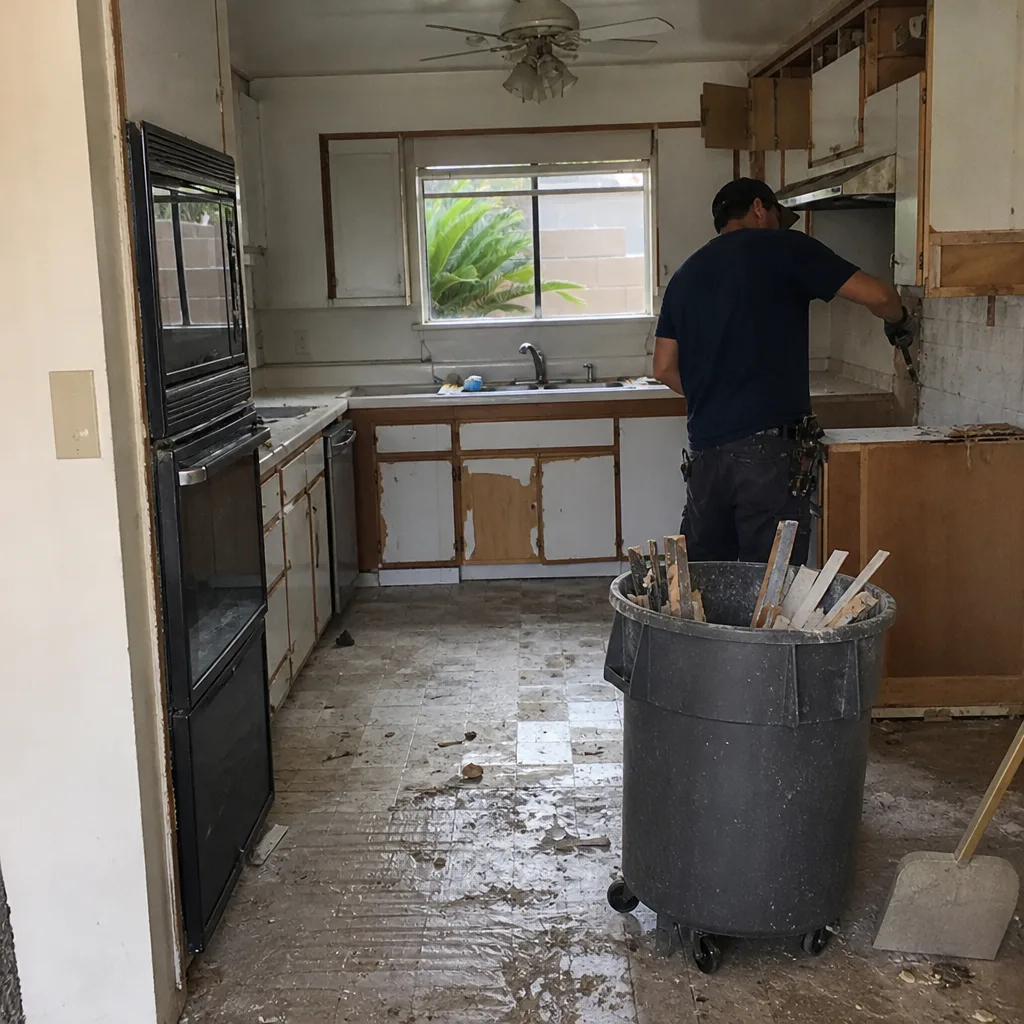 Before
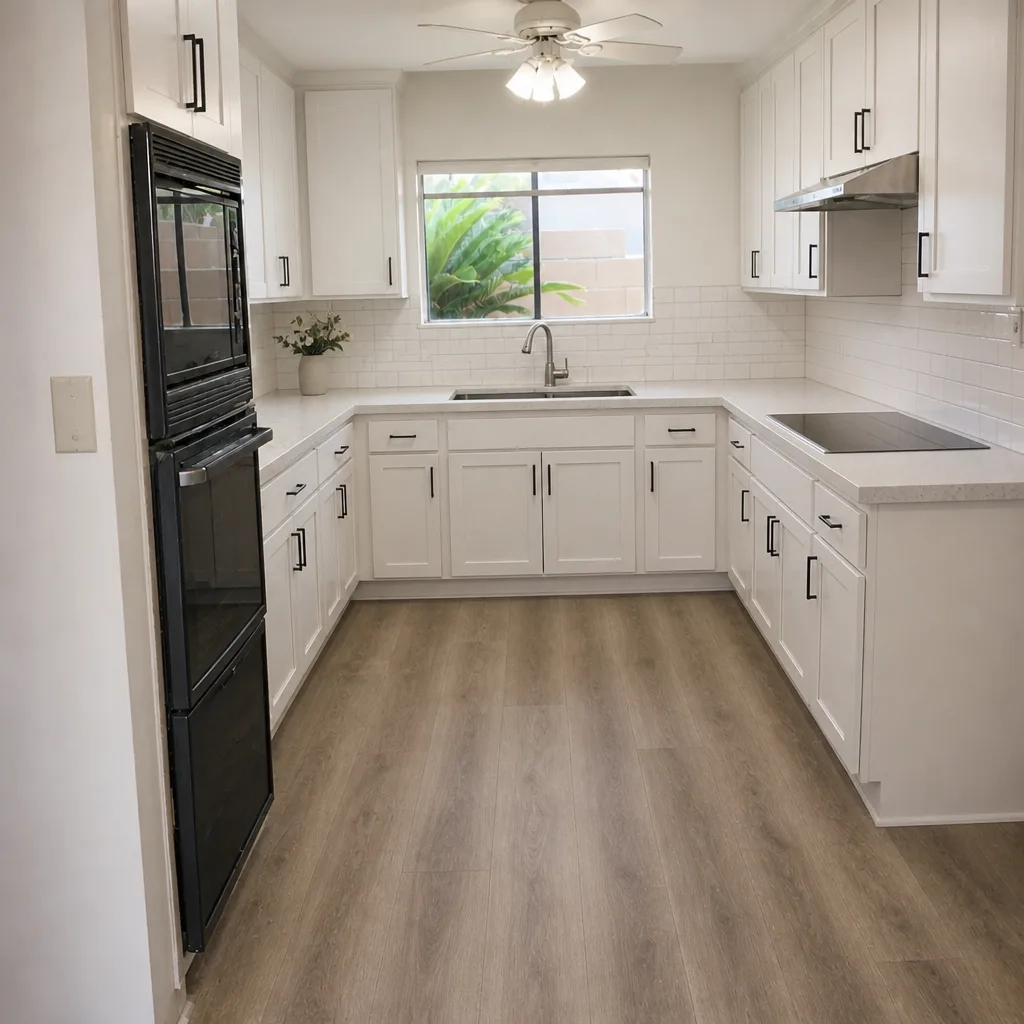 After
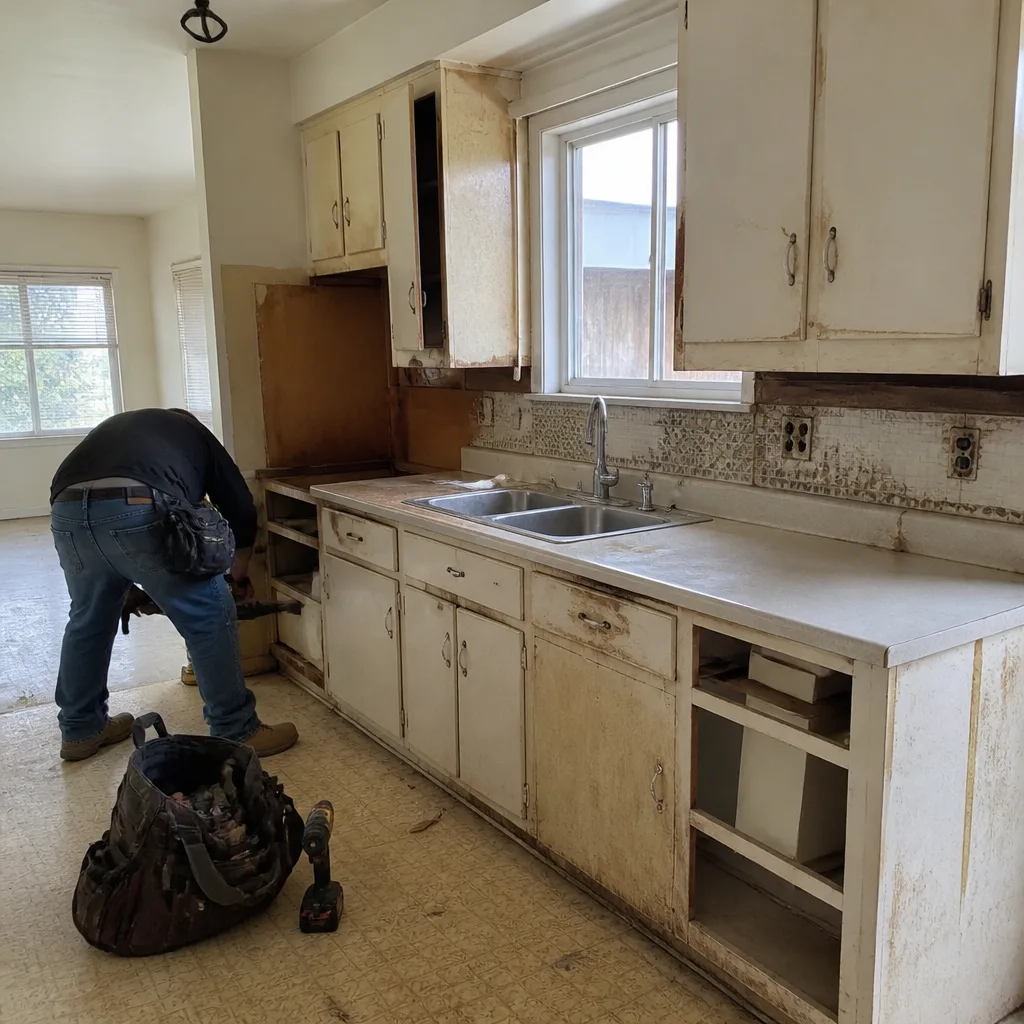 Before
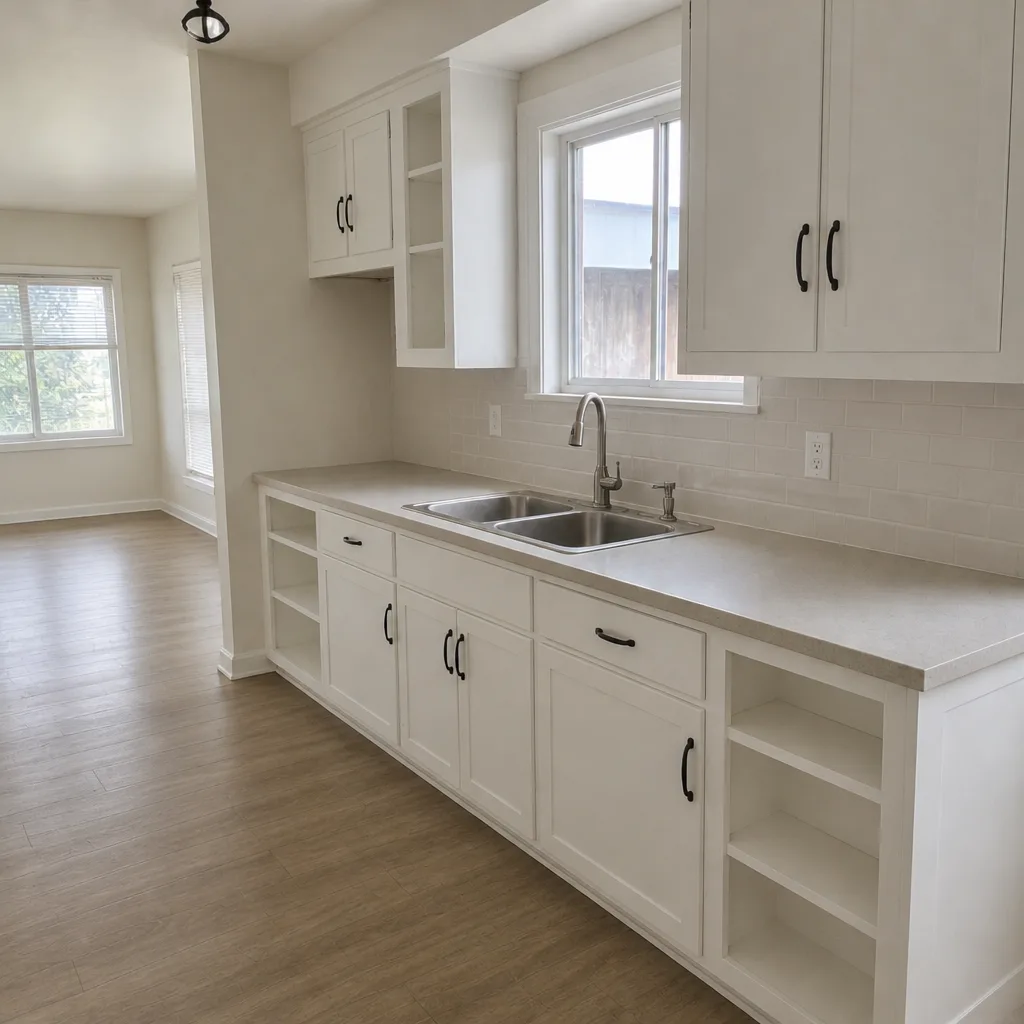 After
When to Call a Professional
Some maintenance tasks belong on your calendar. Others need someone who’s done it a hundred times. Call a pro if a cabinet door won’t stay aligned after two adjustments, if the counter has a visible gap where it used to meet the backsplash, or if there’s water staining at the base of a cabinet or under a sink. Those point to movement or moisture infiltration, and a maintenance wipe won’t fix either. The same goes for a grout line that keeps failing after a reseal: a repeated failure is usually a substrate or ventilation issue, not a sealing issue. Penhallow Remodeling Huntington Beach offers free estimates in Huntington Beach. Our technicians have up to 22 years of experience with cabinets, countertops and the coastal conditions that cause the failures above. Call (888) 329-8145 to schedule yours.
Frequently Asked Questions

Wipe the cabinet fronts monthly with a damp microfiber cloth and mild soap, and dry immediately. In a coastal kitchen, salt air and cooking grease build a residue that’s easy to remove monthly and hard to remove after six months. Add a deeper inspection every six months and the annual section of the schedule above.
Thermofoil is the least vulnerable to UV fading, though it’s most easily damaged by heat. Painted finishes are the most UV-sensitive and will go chalky near a sunny window without yearly conditioner. Stained wood sits in between but fades unevenly. When we specify KraftMaid or Wellborn cabinetry, we match the finish to the room’s sun exposure so the maintenance schedule works with the material, not against it.
Drop a bead of water on the surface. If it beads up and sits there, your sealer is still good. If it soaks in within a minute, it’s time to reseal. Quartz and engineered stone like Cambria come sealed at the factory and usually just need a wipe, while granite and other natural stones need a yearly penetrating sealer.
Inspect the caulk at sinks and backsplashes every six months and plan to replace it every two to three years. Coastal sun and temperature swings wear the joint faster than inland conditions. A soft or lifting seam should be cut out and reapplied right away; caulking over failing caulk doesn’t last.
Yes, you can usually do it yourself. Most hinges adjust in three directions with a screwdriver. If a door still won’t stay aligned after two tries, or a screw keeps stripping the wood, that’s the point to call a professional. A Bathroom Remodeling in Huntington Beach visit can also address similar cabinet trim issues that come up in bathrooms.
The schedule starts the day the remodel finishes. New finishes benefit from monthly care from the first month. If any finish fails inside the first year, our 365-Day Done Right Promise covers it: if it’s not done right, we make it right, at no charge, in writing. Our free return visit policy applies too, so a second look costs nothing. Reach out at (888) 329-8145 if something doesn’t look right early.
The Bottom Line
A Huntington Beach kitchen doesn’t need a different set of tools, it needs a different calendar. Monthly wipes, a six-month inspection and an annual deep task cover the three forces a coastal home puts on a kitchen finish: salt air, sun and cooking grease. Match your cabinet finish care to the material, keep your grout and caulk on their separate intervals, and check your hinges and appliance clearances while a fix is still free. Do those three things and the kitchen in your Penhallow Remodeling Huntington Beach home will hold up well past the manufacturer’s care sheet.
When a maintenance check turns up something that needs a real repair, or when you’d rather have the schedule built into the next remodel, we’re here. Call (888) 329-8145 for a free estimate. Every job from Penhallow Remodeling Huntington Beach comes with a written price before any work starts, a real arrival window, and the 365-Day Done Right Promise in writing. A live person answers the phone around the clock, and every technician who comes to your door is background-checked and in uniform.
Written by the team at Penhallow Remodeling Huntington Beach.