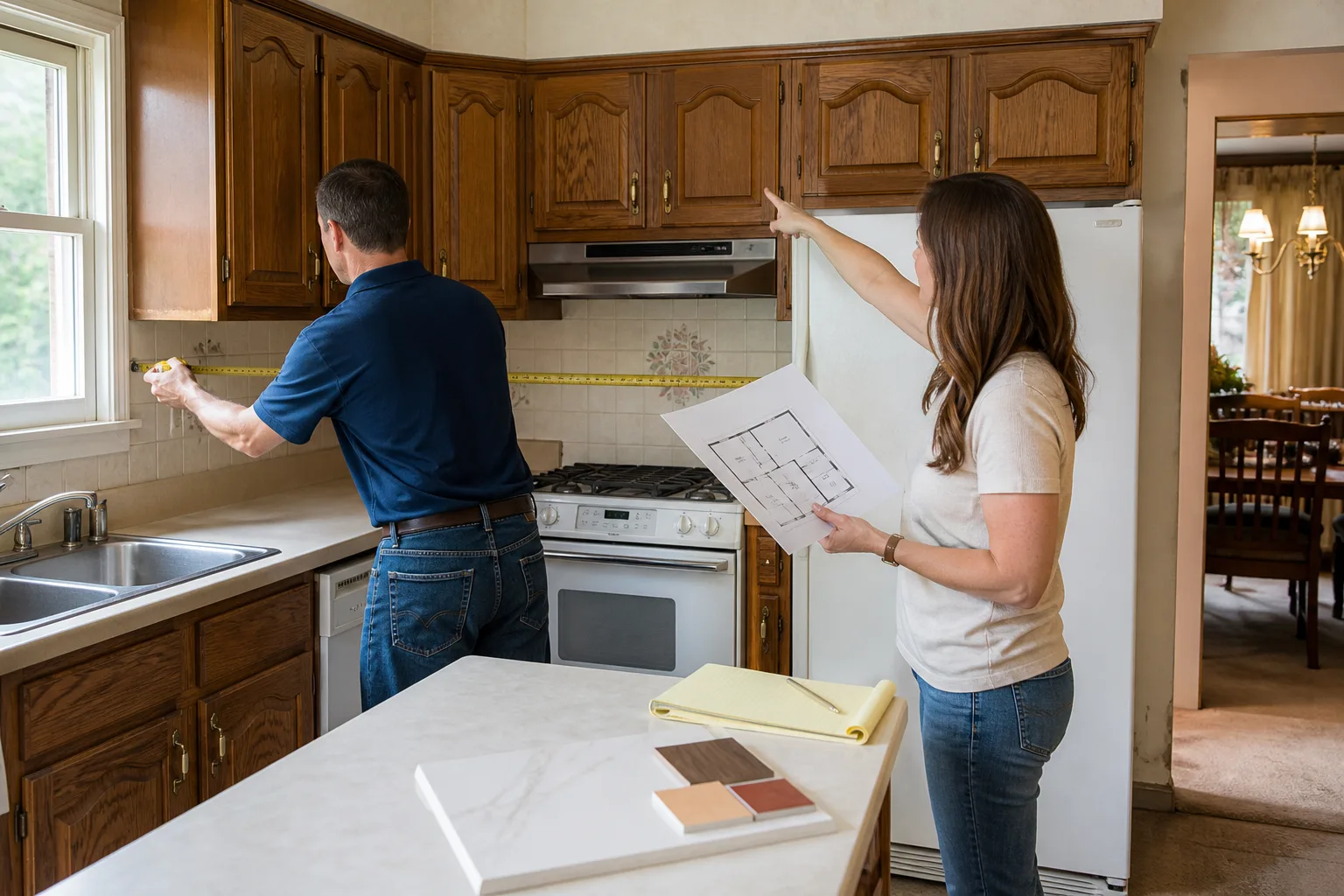
Last updated November 17, 2026

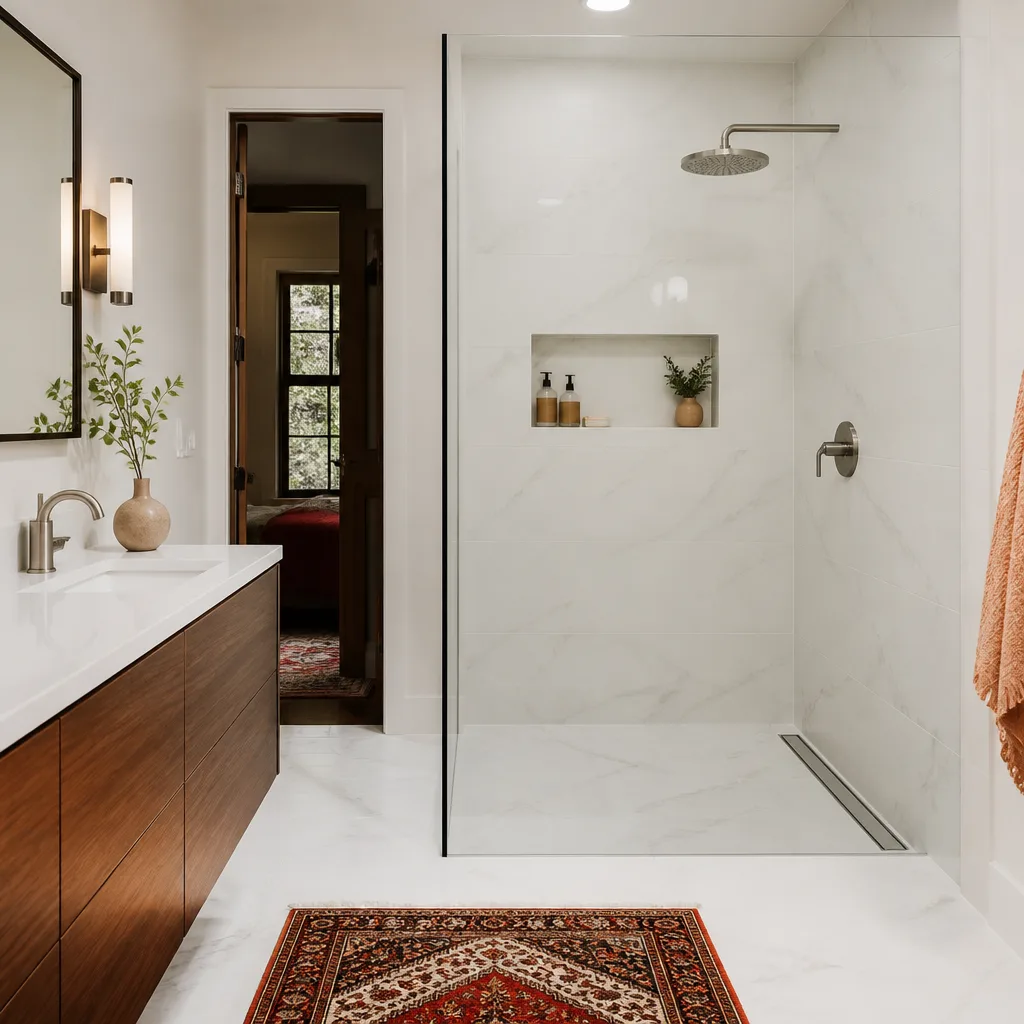
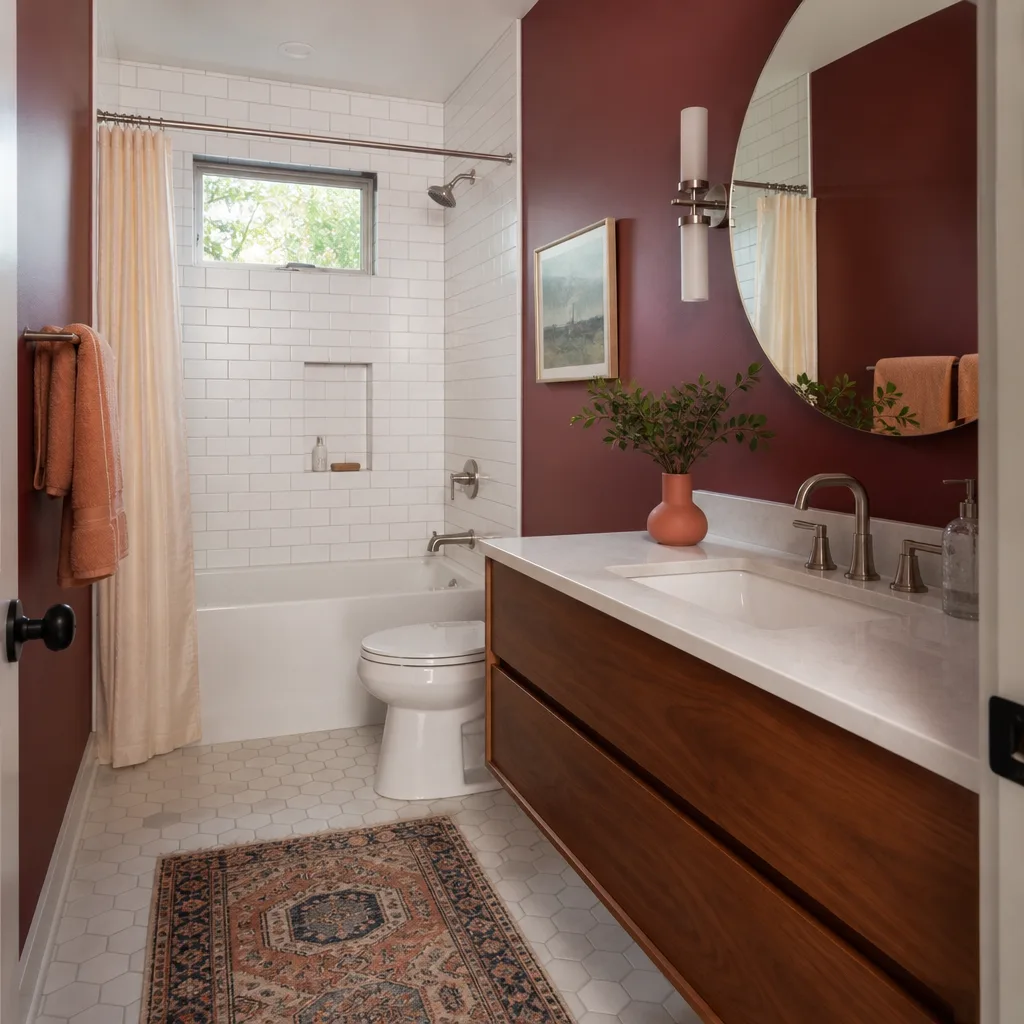
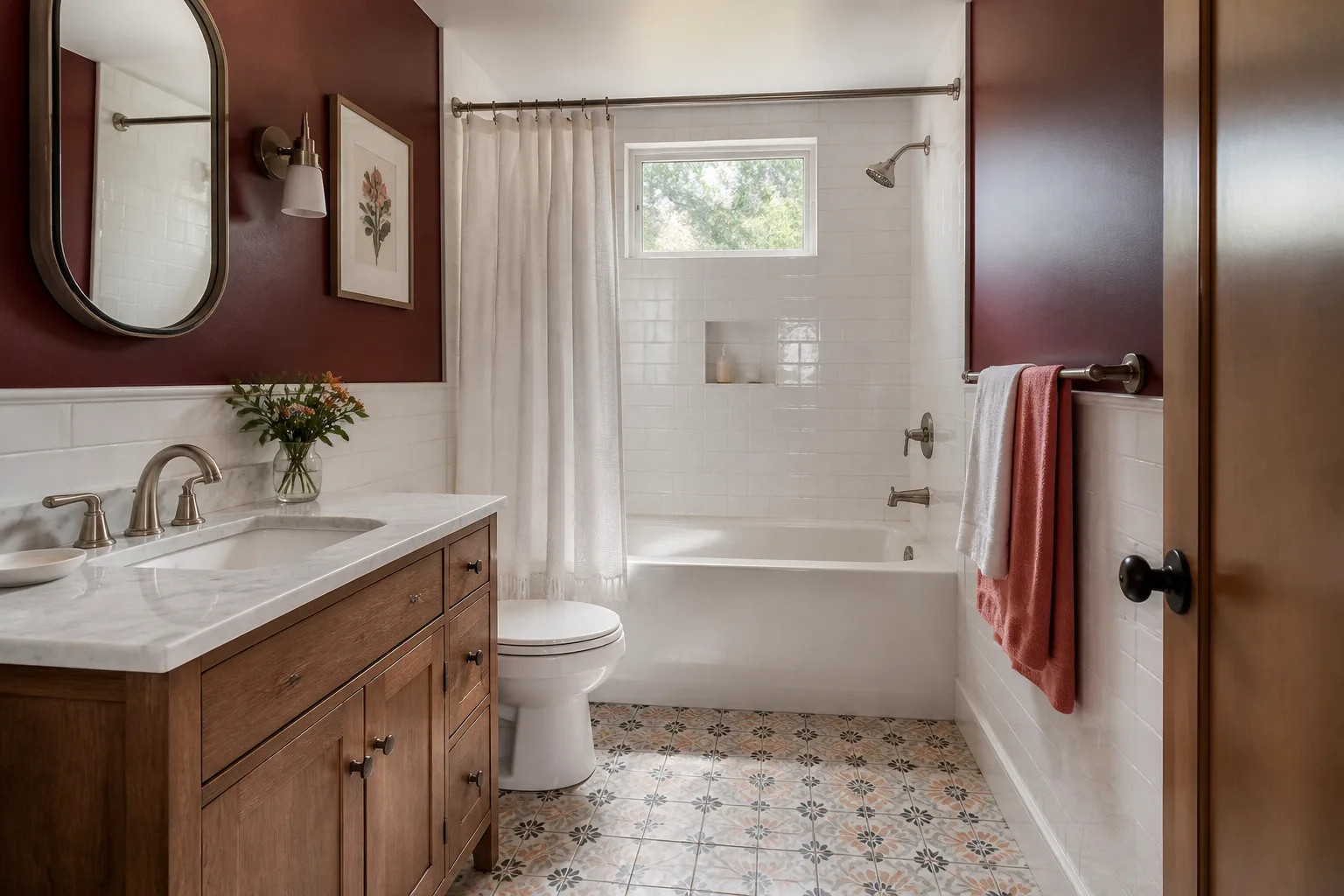




Free written scope consultation - allowances, timeline, and change-order rules on paper before a single trade is scheduled
Bathroom Remodeling Warning Signs Every Homeowner Should Know
A contractor who can’t produce a written price before demo day is statistically more likely to hand you a “change order surprise” mid-project. Industry data puts that number at roughly 1 in 3 verbal-estimate jobs. That’s a business warning sign, and it shows up long before anyone sets a tile. Most guides tell you to look for wavy grout lines and hollow-sounding floors. Those matter, but they arrive too late to protect you. The real signals appear in the first conversation and the paperwork, in how a contractor talks about substrate and how they schedule payments. This guide covers both categories, gives you a walkthrough checklist you can use before signing anything, and explains what a clean bathroom remodel on a Huntington Beach property should look like from the business side.
Quick Answer
The biggest bathroom remodeling warning signs are business red flags, not craft defects: no written contract or written price before work starts, a demand for more than 10% upfront, vague start dates, and a contractor who can’t explain what’s under your existing floor. Craft problems like uneven tile or caulk smeared over grout matter, but they surface after you’ve already committed. Read the paperwork first, and most bad remodels never start.
Styles & brands we work with
- Kitchen remodeling
- Bathroom remodeling
- Home additions & ADU
- Roofing
- Windows & doors
- Driveway & pavers
- Fence
Table of Contents
- Craft Red Flags vs. Business Red Flags
- What Legitimate Contractor Paperwork Looks Like
- The Substrate Conversation Test
- Upfront Payment Red Flags
- Mid-Project Warning Signs Homeowners Miss
- A First-Walkthrough Checklist
- Huntington Beach-Specific Things to Watch
Craft Red Flags vs. Business Red Flags
Most homeowners know the craft list. Uneven tile joints that wander. Grout color that shifts across a wall because two different batches got mixed. Caulk where grout should be, usually along a floor line or in a shower corner, which tells you someone covered a gap instead of fixing what caused it. A shower pan that slopes toward the wall instead of the drain. These are real problems and worth watching for during the build.
But they’re symptoms, not causes. The cause is almost always upstream. A contractor who skips a written scope of work is the same contractor who skips backer board. When the paperwork is thin, the work is thin too, because neither one was ever priced properly.
Business red flags that appear before work starts
- An estimate given verbally, on a napkin, or as “somewhere around” a number.
- No license number on the estimate, or a number you can’t verify.
- No certificate of liability insurance offered, or resistance when you ask.
- A start date that drifts when you call to confirm it.
- Payments requested before any milestones are defined.
Craft red flags that show up during the build
- Tile lippage (one tile sitting proud of its neighbor) that you can feel with a bare foot.
- Grout joints that change width wall to wall.
- Caulk used as a finish material in wet areas instead of a proper waterproofed joint.
- No visible moisture barrier behind cement board (the moisture-resistant layer behind your tile).
If you’re planning a remodel and want to compare notes, our Bathroom Remodeling in Huntington Beach page lays out what a properly scoped job includes, which is a useful benchmark for any bid you’re reviewing.
What Legitimate Contractor Paperwork Looks Like
A legitimate California contractor’s paperwork has four parts, and any one of them missing is a reason to slow down. None of these are optional or “we’ll send that later” documents.
- A CSLB license number. The Contractors State License Board number should appear on the estimate, the contract, and any advertising. You can verify it on the CSLB website in about a minute. Ask for it out loud and watch how fast it comes back to you.
- Liability insurance certificate. This is a one-page document from the contractor’s insurance carrier naming the coverage and dates. It should be current, not an expired copy from last year.
- Written scope of work. This is the document that says exactly what’s included: demolition, plumbing rough-in, electrical, waterproofing, tile, fixtures, paint, and cleanup. It should also say what’s excluded, because exclusions are where change orders are born.
- A schedule of payments tied to milestones. Money should follow progress. A deposit, then a payment when rough-in is inspected, then when tile is set, then at completion. Payments due “on start” with no milestones behind them are the setup for the change-order surprise.
A contract from our side looks like this because of The Kingswell Way: say the price before the work, show up in the window we gave you, and leave the place cleaner than we found it. That standard is written into the agreement, not just the sales pitch. Written price before any work starts, always. Not an estimate range, not a verbal ballpark, a written number you can hold us to.
If your project is part of a bigger scope, the same rules apply to Kitchen Remodeling in Huntington Beach and to whole-home work. The paperwork standard doesn’t change because the room does.
The Substrate Conversation Test
Here’s a test almost nobody uses, and it’s the most reliable one we know. Ask the contractor what’s under your current bathroom floor.
A qualified tile installer should be able to explain it without being prompted: existing tile over a mortar bed, vinyl over plywood, a slab, or a wood subfloor with a failed moisture barrier underneath. They’ll tell you because it changes the bid. A failed tile floor over a cracked mud bed needs demolition and a new substrate. Tile over sound concrete might not. The number moves by thousands of dollars either way.
Why this question separates the bids
If a contractor quotes a flat price without ever looking at the substrate, they either didn’t look or they’re planning to discover the problem mid-job and hand you a change order. That’s the mechanism behind the “the price ballooned after demo day” story you’ve probably heard from a neighbor. It wasn’t bad luck. It was an unpriced unknown that should have been priced.
In our experience, this is where bids genuinely diverge. A written bid that says “remove existing tile and mortar bed, install new cement board substrate, waterproof with a bonded membrane” is a different document from one that says “install tile.” One is a price. The other is a starting point for negotiations later.
When we walk a bathroom in Huntington Beach, we look at the floor assembly, the wall behind the shower, and how the existing waterproofing was done. It takes ten minutes and it’s the difference between a number that holds and a number that moves.
Upfront Payment Red Flags
California law sets a ceiling here, and it’s worth knowing. A home improvement contractor generally can’t ask for more than 10% of the contract price or $1,000, whichever is less, as a down payment before starting work. Some projects and contracts have different structures, but the principle holds: a large upfront cash request is a warning sign that the contractor is funding your job with your money.
So what does a healthy payment schedule look like on a mid-range Huntington Beach bathroom?
- Deposit: small, tied to materials order, within the legal limit.
- Rough-in complete and inspected: second payment.
- Tile set and waterproofing verified: third payment.
- Final walkthrough and punch list cleared: balance due.
Every payment should be tied to a milestone you can see. If the schedule reads “50% on signing,” that’s the whole conversation. Ask them to restructure it, and if they can’t or won’t, you have your answer.
The same logic applies to repair work under a promise. Our 365-Day Done Right Promise means if the work fails inside the guarantee period, we come back and fix it at no charge, and that’s written on every project. A free second visit if a repair fails, no service call, no re-inspection fee. A contractor who won’t put something like that in writing is telling you something about how the payment terms are likely to go.
Mid-Project Warning Signs Homeowners Miss
Once work starts, the signs change shape. These are the ones we see homeowners miss because the job still looks fine on the surface.
The crew disappears for more than two days
Weather happens, and so do material delays. But a Huntington Beach bathroom should never sit idle for three or more business days with no explanation and no call. That usually means your crew got pulled to another job, which means your schedule is now competing with someone else’s. Ask for a reason and a revised date in writing.
Materials delivered to your site get moved elsewhere
If tile, cabinets, or fixtures arrive at your driveway and then get loaded back onto a truck headed to a different address, ask why. Sometimes it’s a staging decision. Sometimes it’s your materials funding another job, which means you may be waiting on a re-order you didn’t know about.
Permits aren’t posted where you can see them
A permitted bathroom remodel should have the permit posted visibly, typically near the entry or the work area. If you can’t find it, ask for the permit number and the inspection schedule. An unpermitted bathroom in Huntington Beach can complicate a future sale, and it can complicate your insurance if something leaks.
Change orders arrive without a written cause
A legitimate change order is a written document with a price and a reason, signed before the extra work happens. A verbal “we found rot under the floor, it’ll be about two grand more” is not a change order, it’s a negotiation under pressure. Ask for it in writing, and take a day to think about it.
A First-Walkthrough Checklist
Use this on the first visit, before you sign anything. Keep it on your phone. It takes fifteen minutes and it’s saved more homeowners than any review site.
- License number on the estimate and the contract. Verify it on the CSLB site.
- Certificate of liability insurance. Ask to see it, current, with dates.
- Written scope of work. Included work, excluded work, and the brand of materials named.
- Schedule of payments. Milestone-based, within the legal deposit limit.
- A written price and start date. A number, not a range.
- The substrate answer. They should know what’s under your floor before quoting.
- Permit responsibility in writing. Who pulls it, who pays, who is present for inspection.
- The written guarantee. In plain terms, what it covers and how long it lasts.
- Who shows up. Ask if the crew is background-checked and uniformed, and whether the name on the contract is the crew doing the work.
- What happens after the job. A written process for the final walkthrough and the punch list.
That last one matters. The walk we do at the end of a project is where the small things get found, and no project should close with a list of items “we’ll get to.”
Huntington Beach-Specific Things to Watch
Huntington Beach bathrooms carry a few local conditions that make the business red flags even more expensive. The marine layer and coastal humidity mean moisture management matters more here than in inland cities. A contractor who doesn’t bring up ventilation, moisture-resistant board, and a properly bonded waterproof membrane is a contractor working from an inland template. A shower that holds up in Riverside may not hold up four blocks from the sand.
If you’re inside a tract home in Huntington Beach built in the 1960s or 1970s, you likely have original plumbing and a floor assembly that will need real attention. That’s not a scare tactic, it’s how the bid should be built. A contractor who quotes a bathroom in an older Huntington Beach neighborhood without looking at the floor or the drains is quoting a number they can’t hold.
And you should be able to reach someone. Live phone coverage 24/7 by a real person, not an answering service or a voicemail prompt, is a standard we hold to because the emergency that starts at 9:40 on a Sunday evening doesn’t wait for a callback window.
For projects that extend beyond the bathroom, it helps to know how the broader scope works. See our General Contractor in Huntington Beach page for what a properly sequenced whole-home job includes, and start from our Penhallow Remodeling Huntington Beach home if you’re mapping out several rooms at once.
Common Mistakes to Avoid
- Choosing on price alone. The lowest quoted number is usually the one that moves most after demo. Ask for the written scope, then compare the documents, not the totals.
- Paying more than the legal deposit upfront. California limits the down payment to 10% or $1,000, whichever is less, on most home improvement contracts. Anything above that is a reason to pause and ask questions.
- Skipping the insurance certificate. If a worker is hurt in your bathroom and the contractor isn’t insured, the liability question can land in an uncomfortable place.
- Letting a permit slide. An unpermitted Huntington Beach bathroom can complicate a sale, and it’s harder to fix after the fact than it is to ask for it upfront.
- Accepting a verbal estimate. A verbal estimate is not a price. It’s an opening position, and it usually doesn’t survive contact with demo day.
- Not asking who’s on the crew. Background-checked, uniformed technicians are a standard. Ask whether that applies to the full crew, not just the person who gave you the estimate.
- Overlooking the ventilation plan. Coastal humidity plus a bathroom with no functioning exhaust fan is a recipe for mold behind the paint. Ask what the ventilation plan is in writing.
These are the same mistakes behind almost every “the contractor never came back” story. None of them are about tile. All of them are about the business around the tile.
See the difference
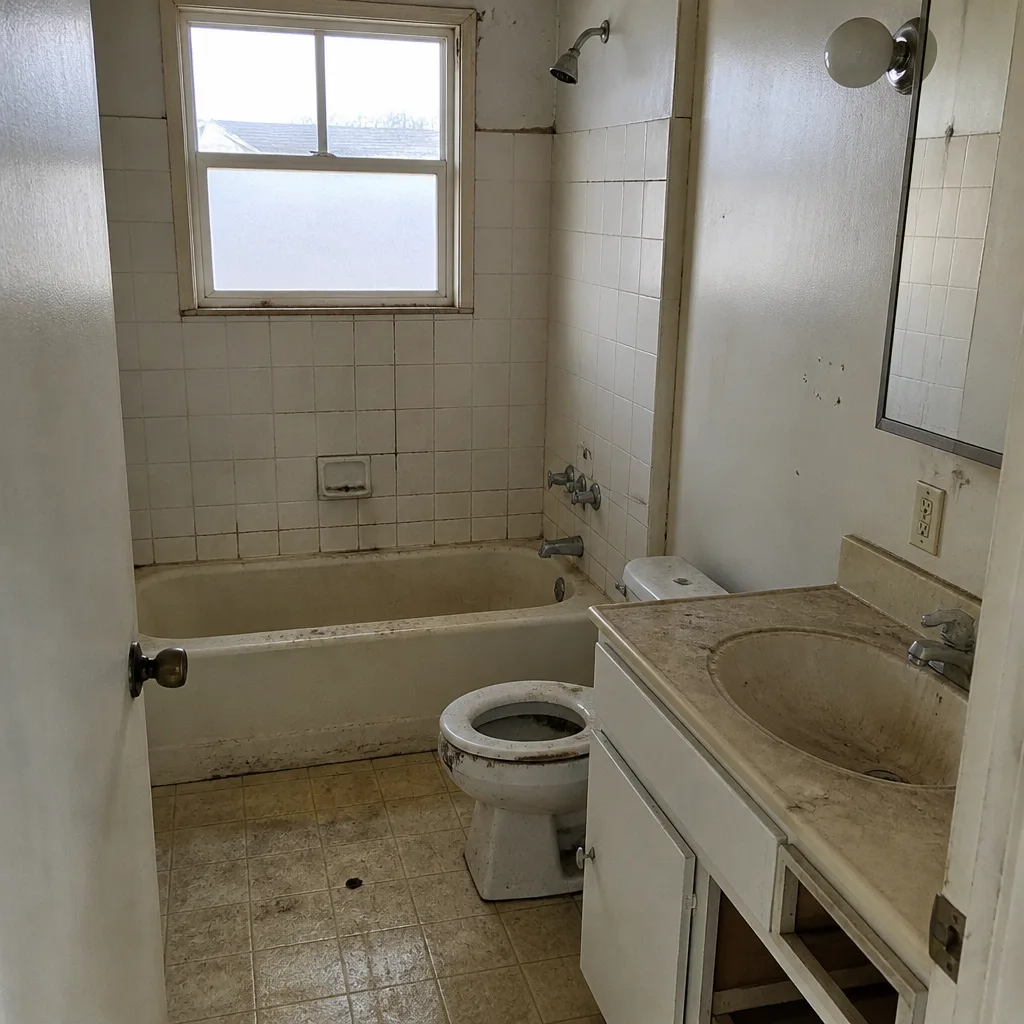 Before
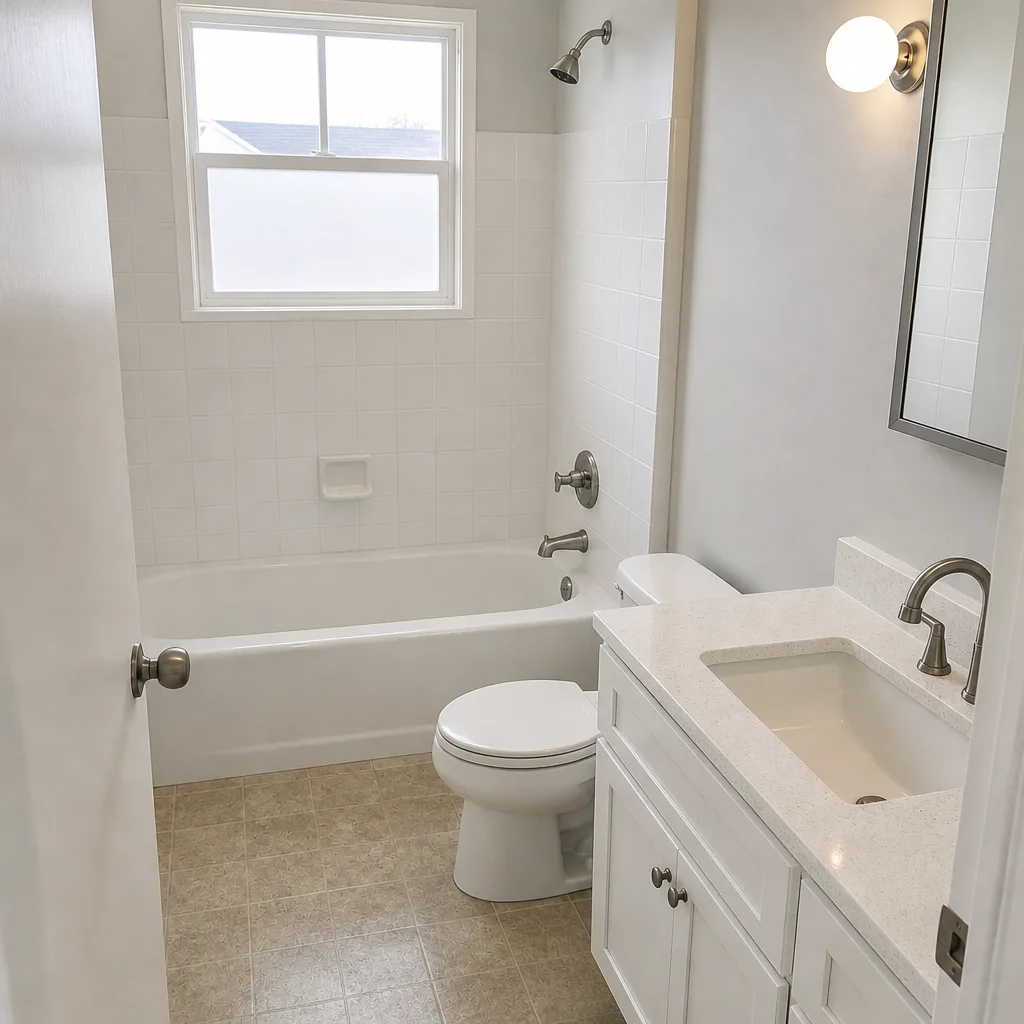 After
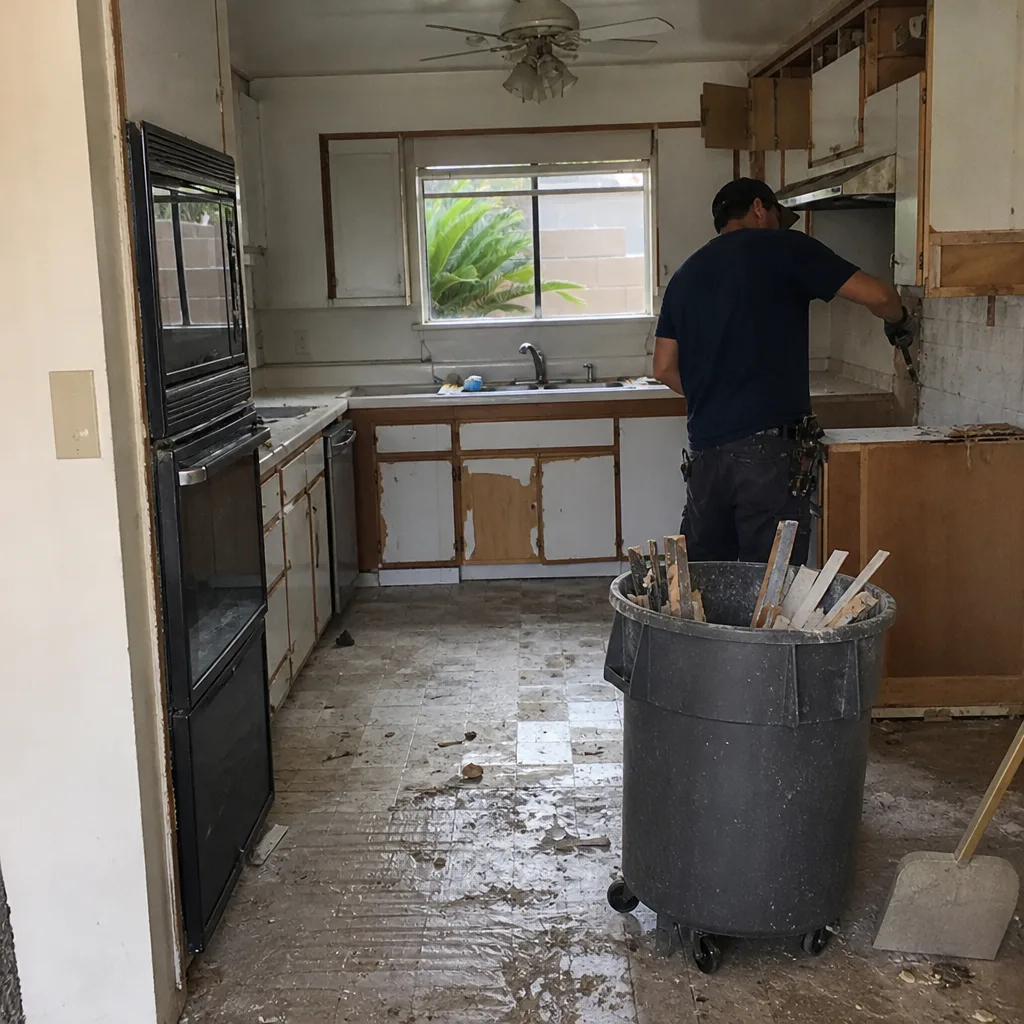 Before
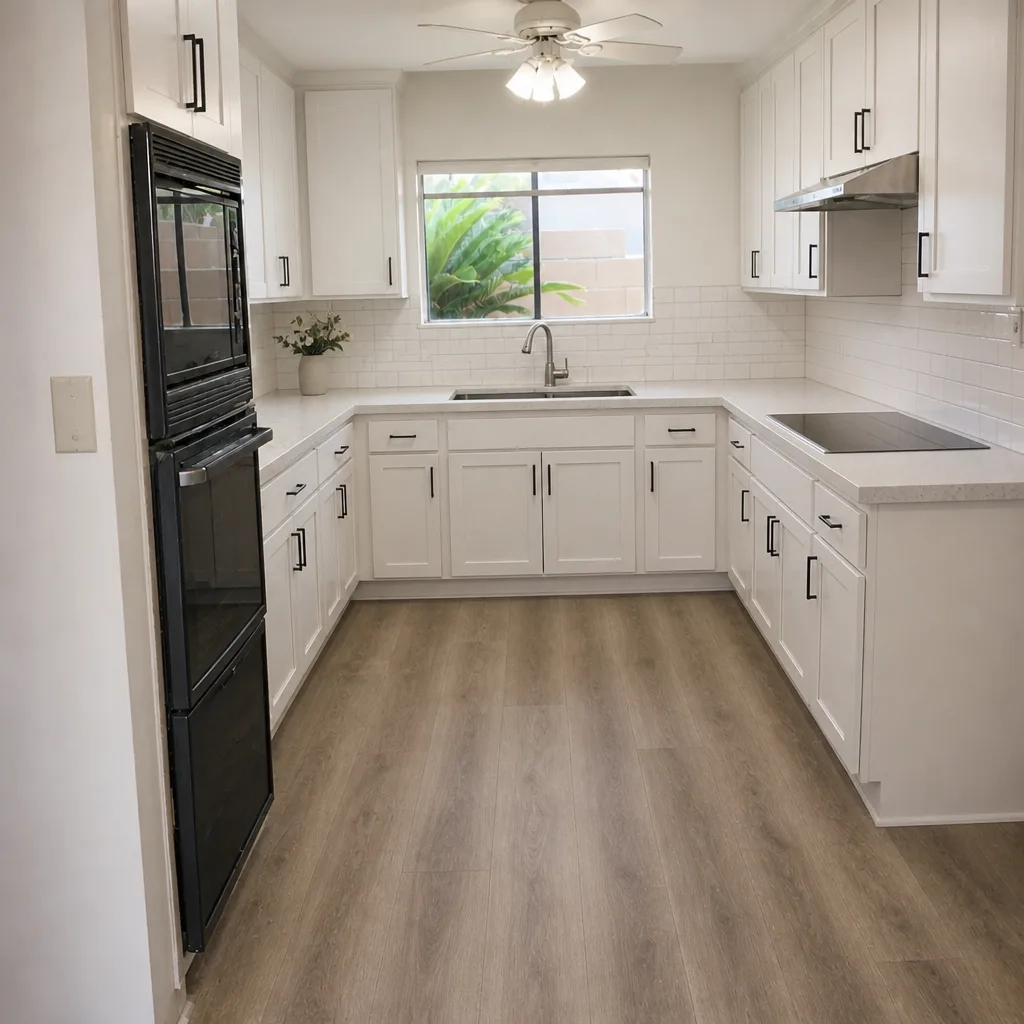 After
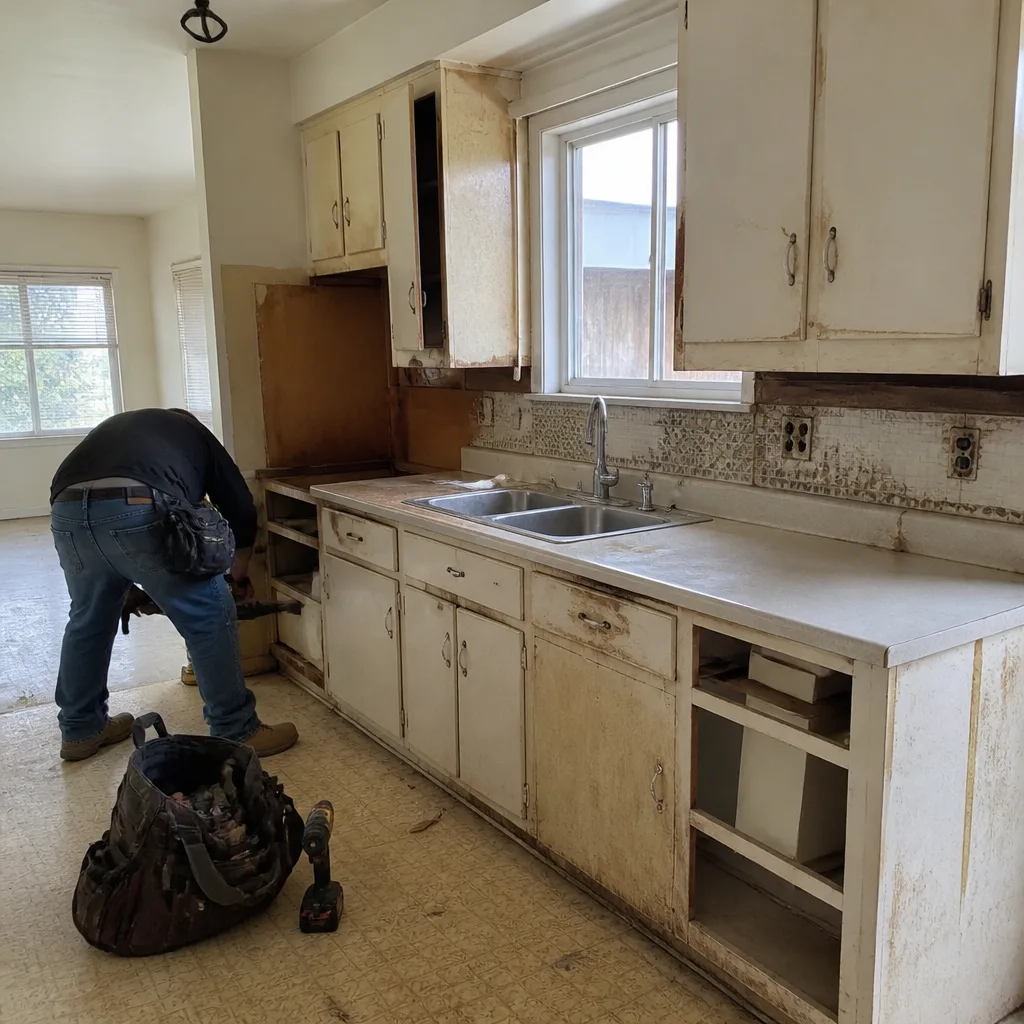 Before
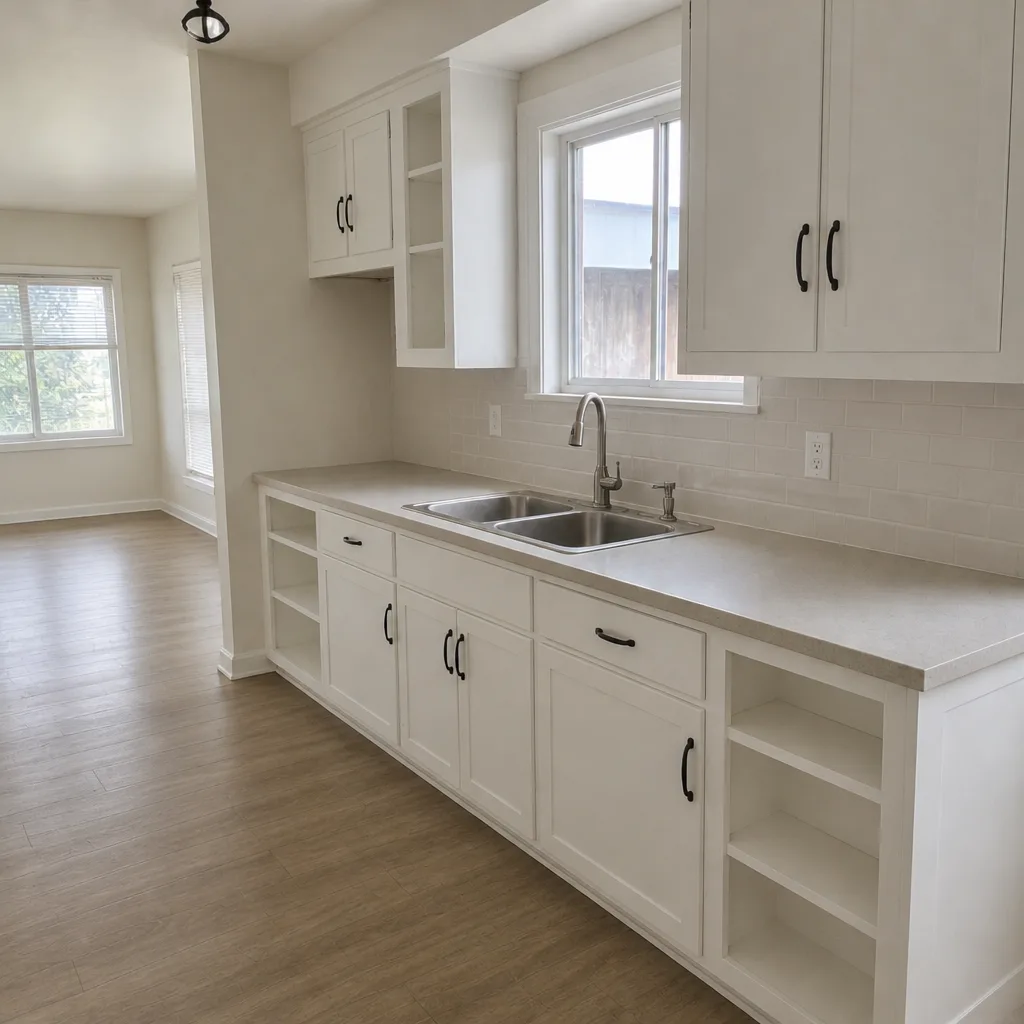 After
When to Call a Professional
Call a professional if the contractor you’re considering won’t produce a written price before work starts. Call if they ask for more than the legal deposit, won’t show a license and a current insurance certificate, or can’t explain what’s under your existing floor. Call if your current crew has gone dark for two or more business days without a call and a revised schedule. Call if a change order shows up without a written reason and you feel pressure to sign. And call if you’re looking at a repeat leak, a failing shower pan, or a bathroom that’s been half-finished by someone who stopped returning messages. Those are the jobs a general contractor should be handling, and they’re the reason the paperwork standards exist. Penhallow Remodeling Huntington Beach offers free estimates in Huntington Beach, and you can reach us at (888) 329-8145 for a written number before any work starts.
Frequently Asked Questions
The most common warning signs are business red flags: no written contract or written price, a request for more than 10% upfront, a vague start date, unverifiable license and insurance, and a contractor who can’t explain what’s under your existing floor. Craft problems like uneven tile and caulk over grout appear later, after you’ve committed. Read the paperwork first. If you want a second opinion on a bid, call (888) 329-8145, and our estimates are free.
In California, most home improvement contracts cap the upfront payment at 10% of the contract price or $1,000, whichever is less. Any demand above that is a warning sign. The rest should be tied to milestones you can see: rough-in and inspection, tile set, final walkthrough. If your contract reads “50% on signing,” ask them to restructure. Call (888) 329-8145 if you’d like to compare your schedule against ours, and our estimates are free.
Yes, in most cases. Plumbing changes, electrical work, structural changes, and shower pan replacements typically require a permit in Huntington Beach, and the permit should be posted visibly during the work. Ask who pulls it and who pays, and get the permit number. An unpermitted bathroom can complicate a future sale and your insurance. If you’re unsure whether your project needs one, call (888) 329-8145 and our estimates are free.
The tell is whether the original bid was written against a real scope. A bid that names the substrate, includes demolition and waterproofing, and prices the known unknowns leaves less room for a surprise. A one-line bid of “install tile” is where the surprises come from. Ask for a written scope with inclusions and exclusions. Call (888) 329-8145 to see a written price before work starts, and our estimates are free.
A written guarantee should say, in plain terms, what’s covered, how long it lasts, and what happens if work fails. Our 365-Day Done Right Promise covers a full year: if it’s not done right, we come back and fix it at no charge, and it’s in writing on every project. A free second visit if a repair fails, no service call, no re-inspection fee. Ask to see the guarantee in writing before signing. Call (888) 329-8145 for details, and our estimates are free.
Sometimes, yes, and it depends on the state of the work. We’ll assess what’s there, what’s salvageable, and what needs to come out, and we’ll give you a written price for the remainder before anything starts. Unpermitted work and un-inspected rough-in come up regularly in Huntington Beach, so we check those first. Call (888) 329-8145 to schedule an assessment, and our estimates are free.
The Bottom Line
A bathroom remodel rarely goes wrong in the tile. It goes wrong in the first conversation, when a price is spoken instead of written and the paperwork never appears. The signs that protect you are readable in that first meeting: a license you can verify, a current insurance certificate, a written scope that names the substrate, a payment schedule tied to milestones, and a written guarantee with a real term. Craft problems show up later, and they’re harder and more expensive to fix. If you remember one thing from this guide, make it this: get the price in writing before demo day. That’s the whole difference between a remodel and a change-order surprise.
Penhallow Remodeling Huntington Beach works from a written price before any work starts, a background-checked and uniformed crew on every job, and a live person answering the phone 24/7. We draw from recognized trade brands including KraftMaid and Wellborn cabinetry, Cambria, Silestone and Caesarstone countertops, and Kohler and Moen fixtures, so the products behind the guarantee are as solid as the promise. Every job gets a written guarantee, and every repair that fails inside the guarantee period gets fixed at no charge. If you’re pricing a bathroom and you’d rather start with a number you can hold us to, call us at (888) 329-8145 for a free estimate.
Written by the team at Penhallow Remodeling Huntington Beach.