Last updated November 17, 2026




Free written scope consultation - allowances, timeline, and change-order rules on paper before a single trade is scheduled
DIY vs Professional Kitchen Remodeling: What’s Safe to Do Yourself
Painting your own cabinets can save you $1,200. Wiring your own kitchen without a permit in California can cost you $8,000 in remediation work before a home sale closes. Those two numbers sit at opposite ends of the same question, and most homeowners never ask it plainly: not “am I handy enough,” but “does a mistake here cost more to fix than hiring out would have cost in the first place.” That single test sorts every kitchen task into safe or dangerous, reversible or permanent. This guide walks through the whole kitchen in Huntington Beach, task by task, with real dollar ranges and the California rules most DIY guides skip.
Quick Answer
Safe DIY kitchen tasks are the ones that are reversible and don’t touch wiring, gas, or structure: painting cabinets, swapping hardware, installing a backsplash over sound substrate, hanging open shelving into studs, and upgrading a faucet. Unsafe tasks are the ones where a mistake triggers a licensed-trade repair or blocks a permit: moving outlets, running new circuits, relocating a gas line, cutting into load-bearing walls, and waterproofing a wet area wrong. If a mistake would need a permit to fix, hire it out.
Styles & brands we work with
- Kitchen remodeling
- Bathroom remodeling
- Home additions & ADU
- Roofing
- Windows & doors
- Driveway & pavers
- Fence
Table of Contents
- The One Test That Sorts Every Kitchen Task
- DIY-Safe vs. Hire-It-Out: A Two-Column Table
- California Permits and What Owner-Builder Status Actually Costs
- The Hidden Cost of Sequencing Errors
- Skill Prerequisites: A Realistic Self-Assessment
- How a Written Scope of Work Helps Even a DIY Project
- Huntington Beach Specifics: Climate, Code, and Resale
- When to Call a Professional
The One Test That Sorts Every Kitchen Task
Every task in your kitchen carries a consequence. The question is whether that consequence is cheap to reverse or expensive to fix. Painting a cabinet door the wrong color costs you a can of stripper and a weekend. Cutting a hole in the wrong spot for a new outlet costs you a drywall repair, an electrician’s visit, a permit, and an inspection. The asymmetry is the whole point: some mistakes cost twenty dollars to undo, some cost thousands.
Ask yourself three questions about any task before you start:
- If I do this wrong, does undoing it require tearing something out or opening a wall?
- Does this task touch a system that a licensed trade is legally required to handle in California?
- Would a future home inspector, buyer, or appraiser flag this as unpermitted work?
One “yes” is a caution. Two or more and it’s a hire-it-out job, no matter how confident you feel with a YouTube tutorial. In our experience across Huntington Beach kitchens, the tasks that fail are almost never the ones homeowners thought were hard. They’re the ones they thought were easy, like adding a dishwasher circuit or setting tile directly over old drywall.
DIY-Safe vs. Hire-It-Out: A Two-Column Table
Here’s the plain split. Left column: reversible, no permit, no licensed trade. Right column: a mistake triggers a licensed repair or a permit problem.
- Safe to DIY: Painting cabinets. Swapping cabinet pulls and knobs. Replacing a faucet on existing supply lines. Installing a peel-and-stick backsplash or tiling over a properly prepped sound substrate. Hanging open shelves into studs. Caulking and re-grouting. Installing a new garbage disposal on an existing circuit. Replacing a range hood that uses the same footprint and wiring.
- Hire it out: Adding or moving an electrical outlet. Running a new 20-amp circuit for a dishwasher or microwave. Any gas line work behind the range or cooktop. Removing or modifying a load-bearing wall. Converting a window into a door. Full kitchen plumbing relocation. Waterproofing a wet area from scratch, like a new sink wall with cement board substrate (the moisture-resistant layer behind tile). Moving a vent hood that requires new ductwork through a wall.
Notice the pattern. Both columns include tasks that look similar on the surface. Replacing a faucet is DIY; relocating the supply lines for it is not. Replacing a range hood is DIY; moving the hood six inches to the left and re-venting it is not. The task you’re doing versus the task you’re creating is the distinction that matters.
We’ve written a full breakdown of what a professional kitchen remodel actually includes in our Kitchen Remodeling in Huntington Beach guide, which is worth reading before you decide what to hand off and what to keep.
California Permits and What Owner-Builder Status Actually Costs
California law lets a homeowner act as an “owner-builder” on their own primary residence. In plain terms: you can pull a permit for electrical, plumbing, or structural work yourself, and you can legally do the work. The law does not require you to be licensed to work on your own home. What it does require is that you do everything to code, pass every inspection, and disclose the work when you sell. That’s the fine print most homeowner forums leave out.
What owner-builder status actually costs, beyond materials:
- Permit fees themselves. A kitchen electrical permit in Huntington Beach typically runs a few hundred dollars depending on scope. That’s the cheap part.
- Time spent on plan review. Plans and inspection scheduling can add weeks to a project you thought would take two weekends.
- Liability for workers you hire under the owner-builder permit. If you hire unlicensed help under your permit and they get hurt or do bad work, you’re the one the state looks at, and workers’ comp doesn’t follow you the way it follows a licensed contractor.
- Disclosure at sale. Unpermitted work must be disclosed. Some buyers walk. Some lenders won’t finance. Some insurers won’t write the policy until the work is inspected and permitted after the fact, which is the expensive path.
If you’re going to act as owner-builder on a permitted task, read the permit and the plan set yourself. Know what the inspector will look for. Don’t start until you do. This is where a licensed General Contractor in Huntington Beach conversation is worth more than the permit fee: understanding what will pass inspection before you spend.
The Hidden Cost of Sequencing Errors
Most DIY kitchen disasters aren’t craftsmanship problems. They’re order-of-operations problems. The backsplash gets done before the countertops and then has to be redone when the countertop template shifts the seam. The cabinets get painted before the hardware is set, and every hole is a repainted door. The flooring gets laid before the appliances are confirmed, and the new fridge doesn’t fit the opening.
Here’s the sequence that avoids the expensive rework, in the order a kitchen actually gets built:
- Confirm appliance specs and finalize the layout.
- Complete rough plumbing and electrical, with inspection.
- Hang drywall and finish walls; patch and prime.
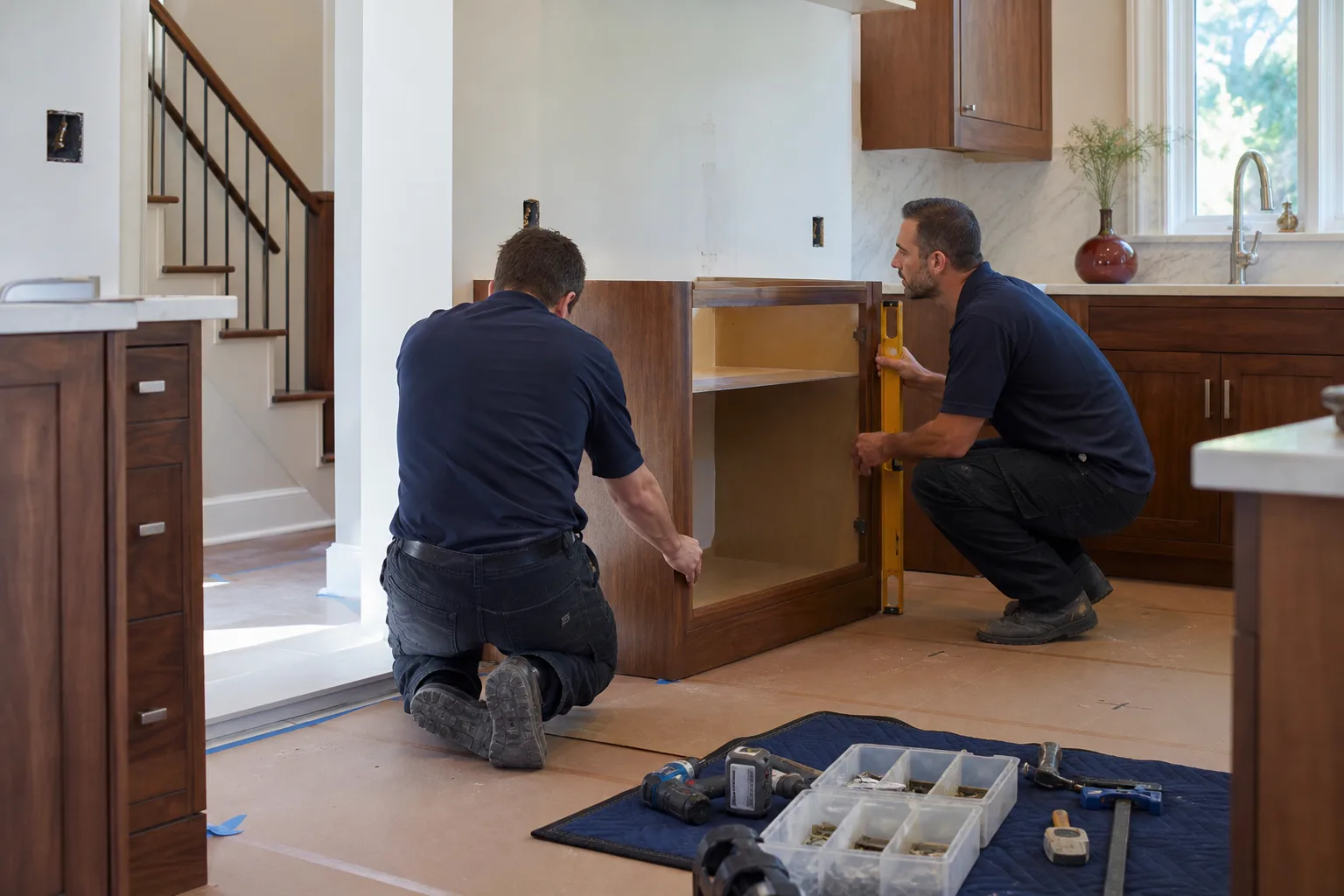
- Install cabinets level and plumb.
- Template and install countertops.
- Set sink, faucet, and disposal.
- Install backsplash last, over the finished counter.
- Set appliances.
- Install hardware, drawer pulls, and knobs after cabinet paint cures.
- Touch-up, seal, and final walkthrough.
Every step depends on the one before it. Doing the backsplash early sounds like it saves time. It doesn’t. It costs you tile, thinset substrate, and a weekend. Build the order in your head before you buy anything, and write it down somewhere you’ll see it every morning.
If you’re planning a bigger project alongside the DIY portion, our team at Penhallow Remodeling Huntington Beach home keeps the whole sequence visible for the client, which is why sequencing mistakes are rare on our jobs.
Skill Prerequisites: A Realistic Self-Assessment
The hardest part of DIY is being honest with yourself about what you can actually do. Painting a cabinet isn’t just a brush and a color. It’s surface prep: degreasing, sanding, bonding primer, the right kind of paint for the material, and curing time. If you skip any of those, the paint peels in six months. Here’s a self-assessment question for each category:
- Cabinet painting: “Have I ever successfully painted a piece of furniture or a door where the finish didn’t peel within a year?” If no, practice on a spare door before touching the kitchen.
- Tiling a backsplash: “Have I ever set tile on a vertical surface and had it stay put on the first try?” If no, do a small test section or hire it.
- Replacing a faucet: “Can I shut off the water supply, disconnect a supply line, seat a new one without a leak, and test it under pressure?” If yes, you’re fine.
- Hanging shelves: “Can I find a stud with a stud finder and confirm it with a nail?” If yes, safe. If no, buy the stud finder before you buy the shelves.
- Electrical: “Am I willing to turn off the breaker, verify with a tester, and pull a permit if the work requires one?” If you answered no to any part, don’t touch it.
The pattern is that surface prep knowledge separates DIY that lasts from DIY that fails. Painting cabinets is the single most-requested DIY task in Huntington Beach, and it’s also the one we’re most often asked to fix. The fix is almost always prep, not skill.
How a Written Scope of Work Helps Even a DIY Project
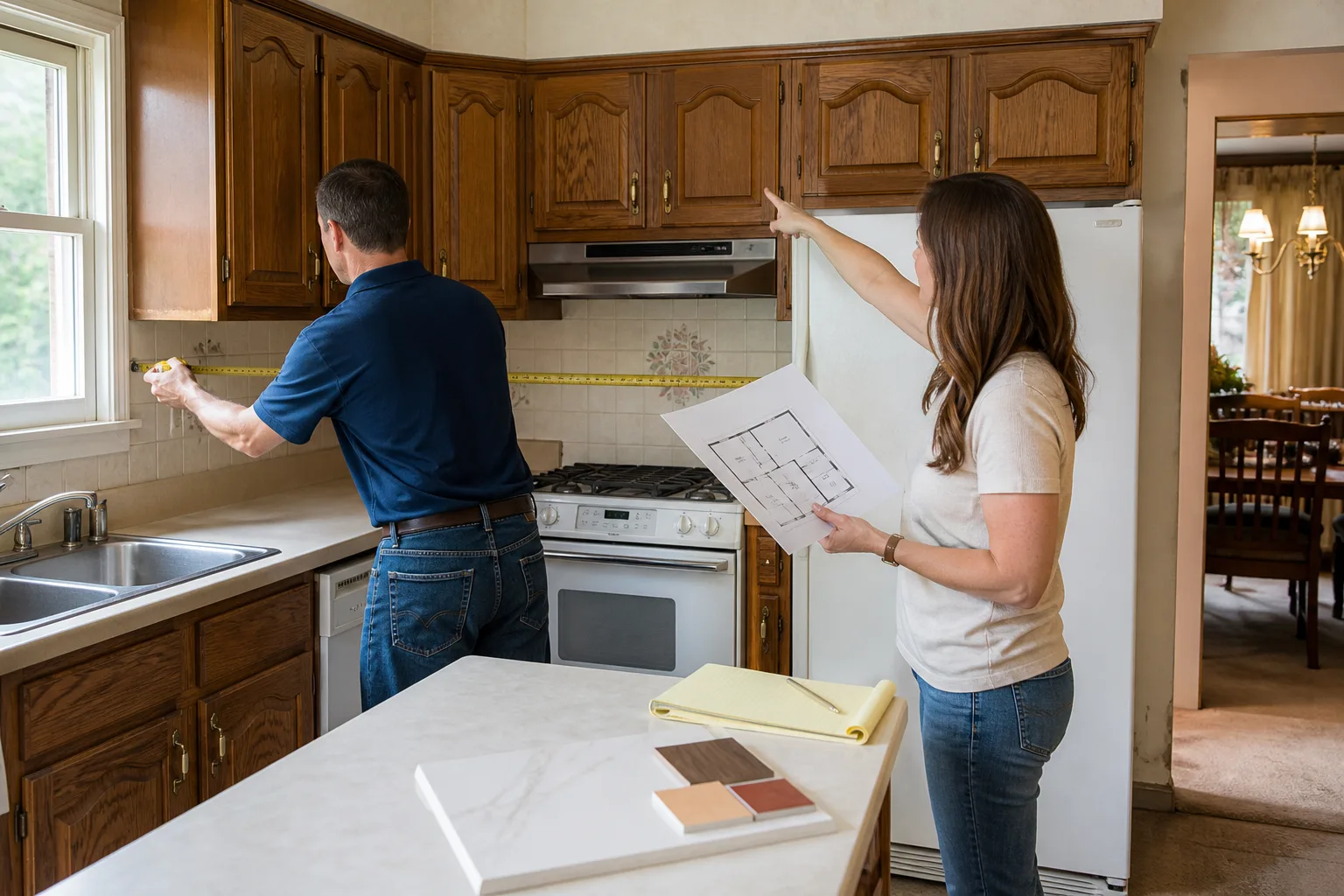
A written estimate from a licensed contractor is one of the most underused DIY tools there is. Even if you plan to do half the work yourself, a professional scope tells you what each phase involves, what it should cost, and what a reasonable timeline looks like. It’s a benchmark you can’t build from scratch on your own.
What to ask for:
- A line-item written price, not a range. One number per phase, so you can match your own work against it.
- A list of what’s included and what isn’t (demo, disposal, patching, permit pulls, inspection).
- The material brands being specified, so you can price the same products at a showroom and see the markup.
- A written guarantee statement, so you understand what a professional puts behind the work you’re about to do yourself.
Penhallow Remodeling Huntington Beach provides a written price before any work starts, backed by the 365-Day Done Right Promise; if the work fails inside that window, we come back and fix it at no charge. Even if you only use that document as a reference for your own project, it tells you what each phase should cost and how long it should take.
Huntington Beach Specifics: Climate, Code, and Resale
Coastal Huntington Beach is kind to cabinets and cruel to everything near the ocean. Salt air oxidizes hardware faster than inland climates: stainless pulls and hinges pit within a few years unless they’re a quality marine-grade alloy. Wood cabinets in homes near the pier or along Pacific Coast Highway expand and contract with coastal humidity swings, so a paint job that fails to seal every edge will peel faster than it would in a drier climate. If you’re DIY painting, use the right bonding primer and seal the edges, not just the faces.
On code, Huntington Beach follows the California Building Standards Code, which means any new electrical circuit, gas line, or structural change requires a permit and inspection. The city’s building department reviews plan sets for kitchen remodels, and inspections happen on a schedule you don’t control. This is the practical reason unpermitted work bites homeowners here: when a Huntington Beach home goes on the market, disclosure requirements mean the buyer’s inspector will find the unpermitted outlet, and the path to fixing it runs back through the city.
On resale, we’ve seen kitchen finishes drive valuation in Huntington Beach more than any other room. A well-executed cabinet paint and hardware upgrade can return most of its cost at sale. An unpermitted electrical addition can kill a deal. The room that most rewards good finish work is also the room where bad structural shortcuts cost the most. That asymmetry is a Huntington Beach fact of life.
If your project includes a bathroom alongside the kitchen, the same disclosure rules apply, and our Bathroom Remodeling in Huntington Beach guide covers what’s safe to do yourself in a wet area (short answer: very little).
See the difference
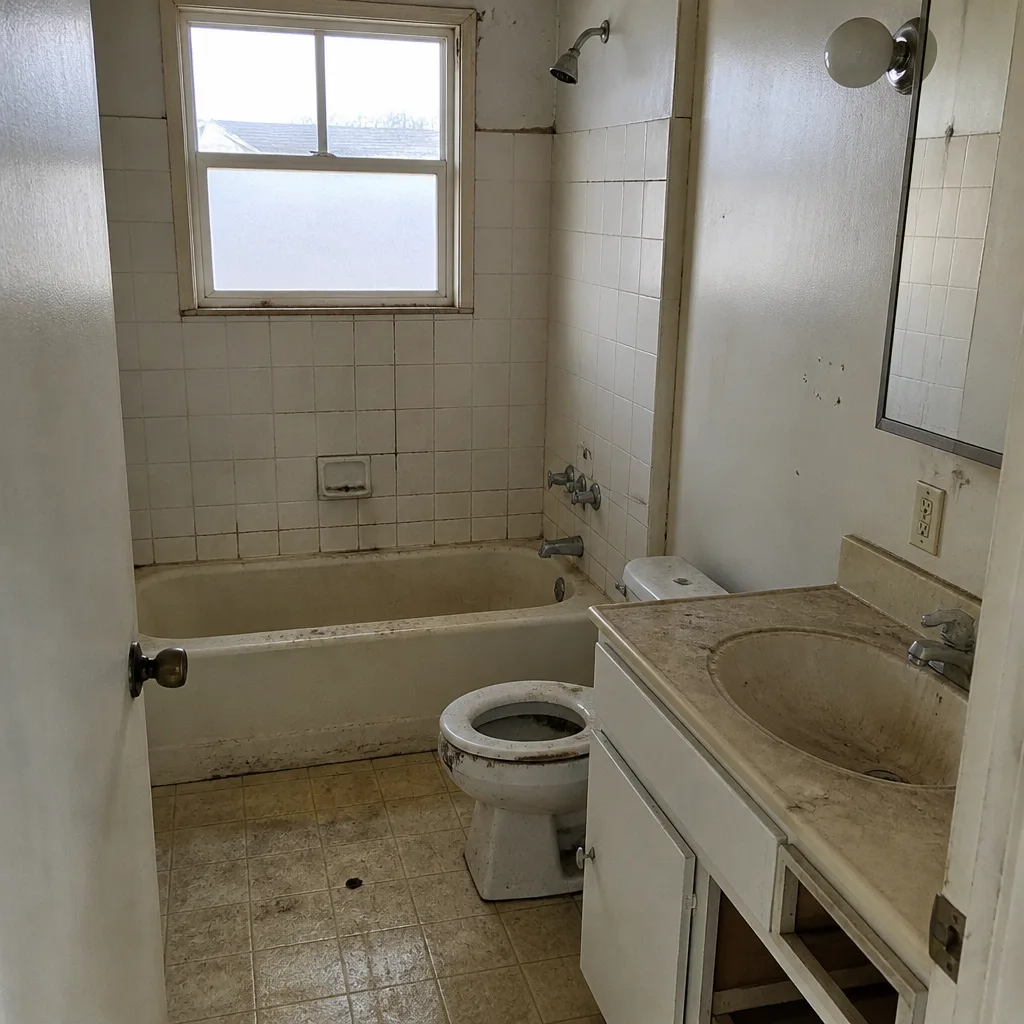 Before
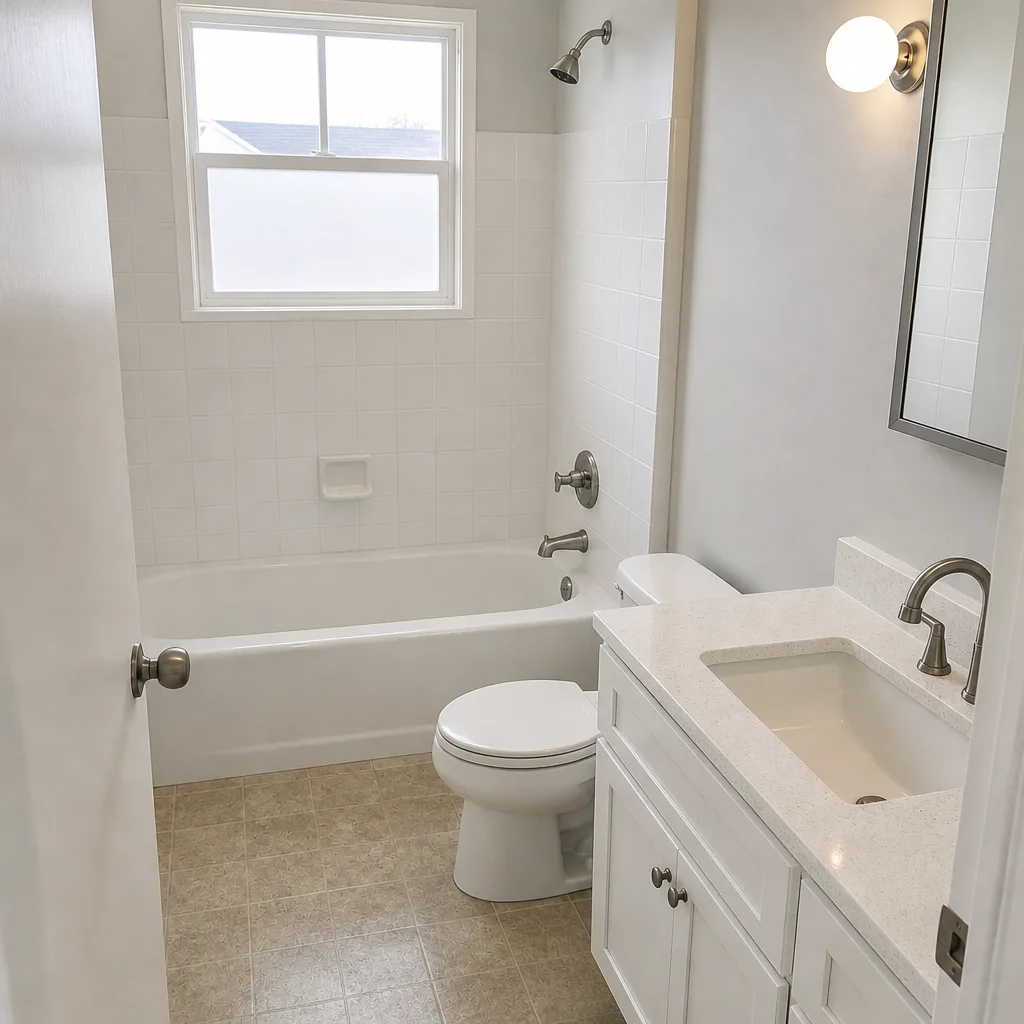 After
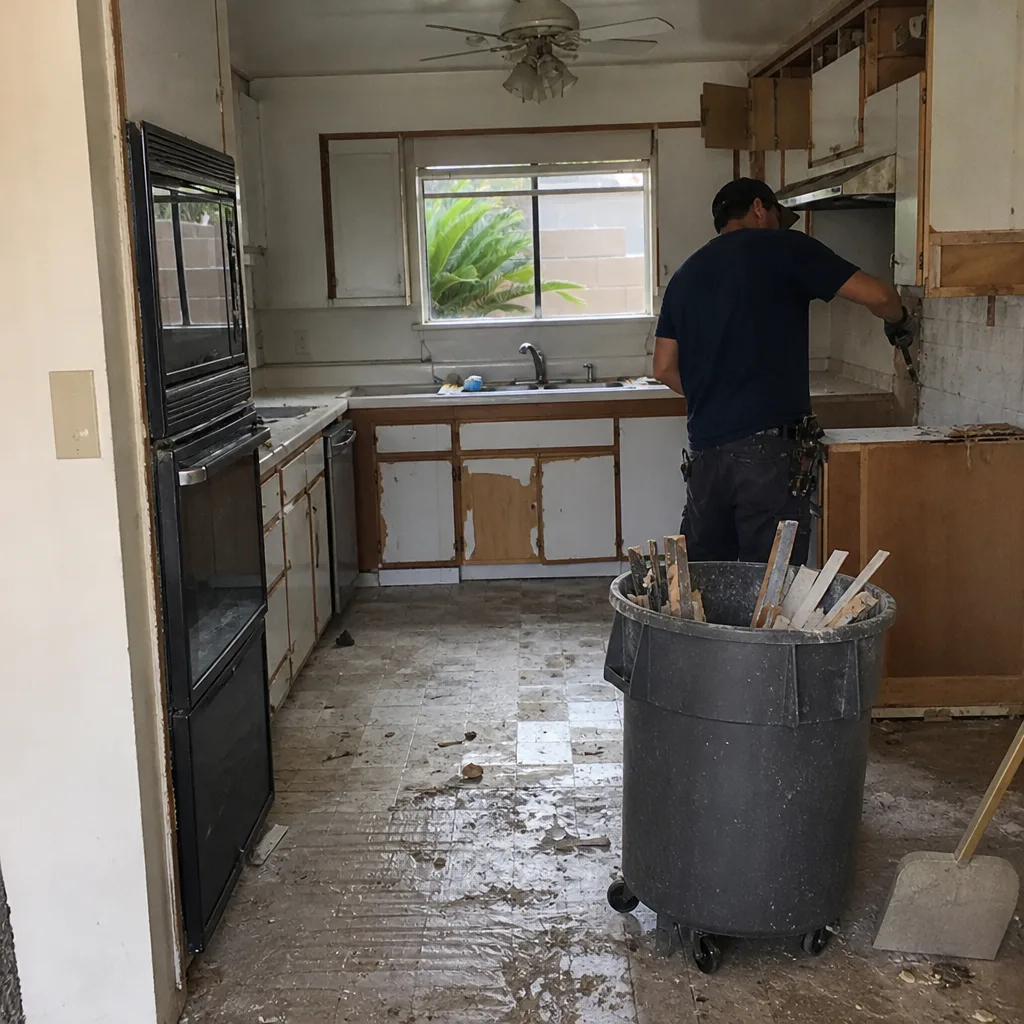 Before
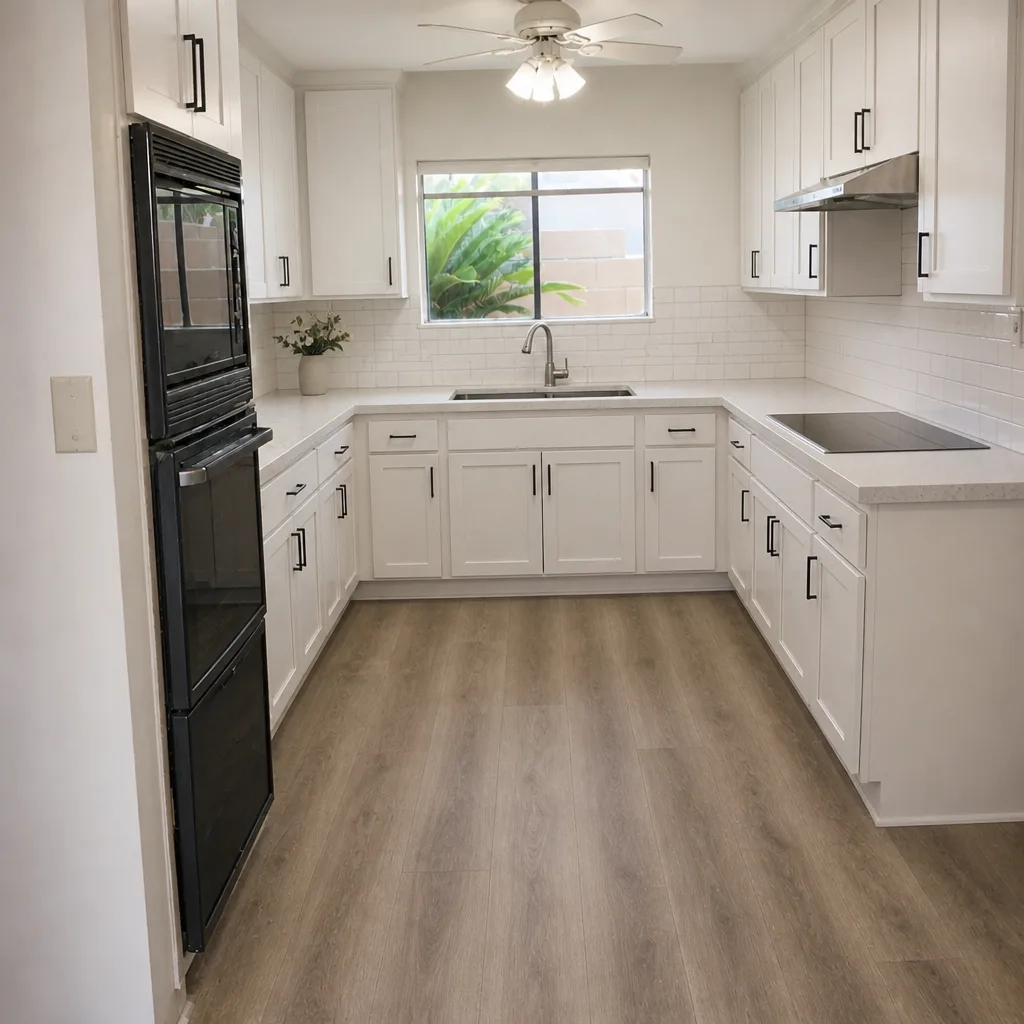 After
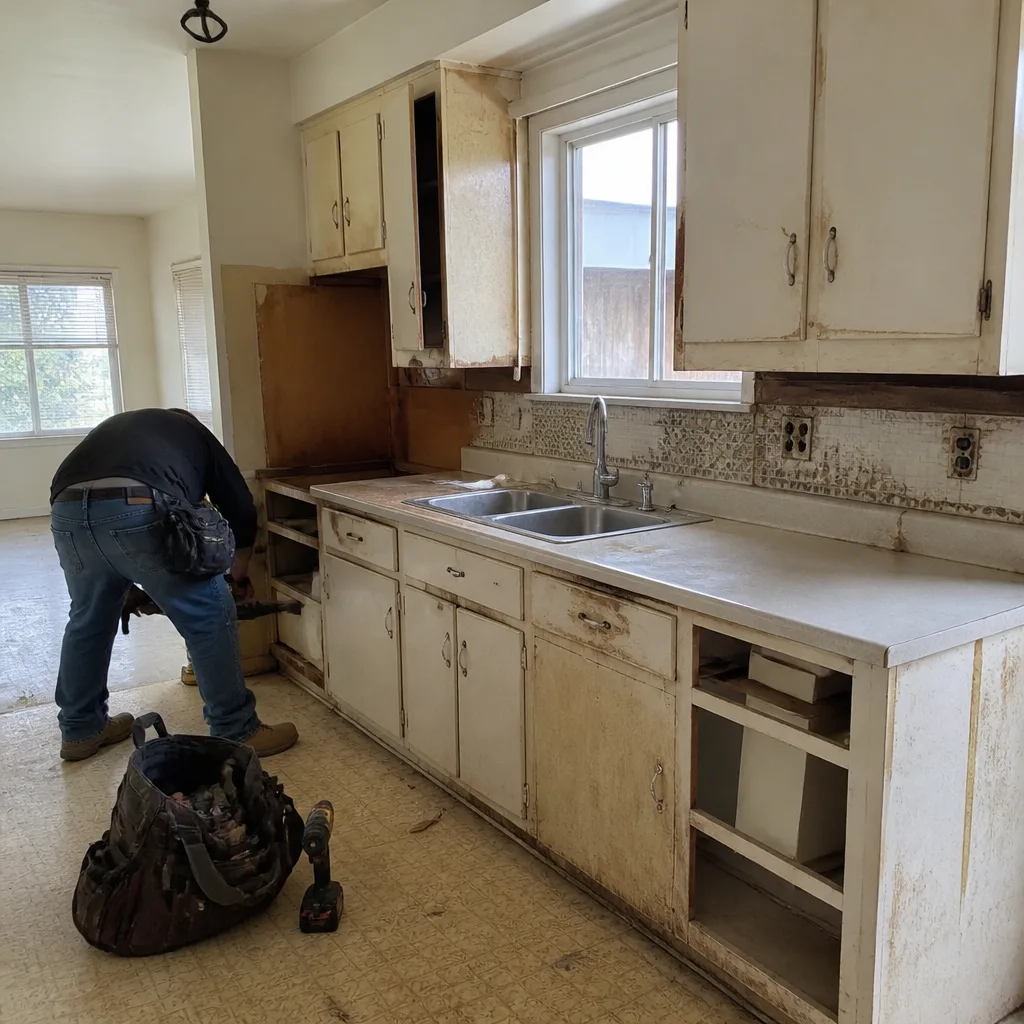 Before
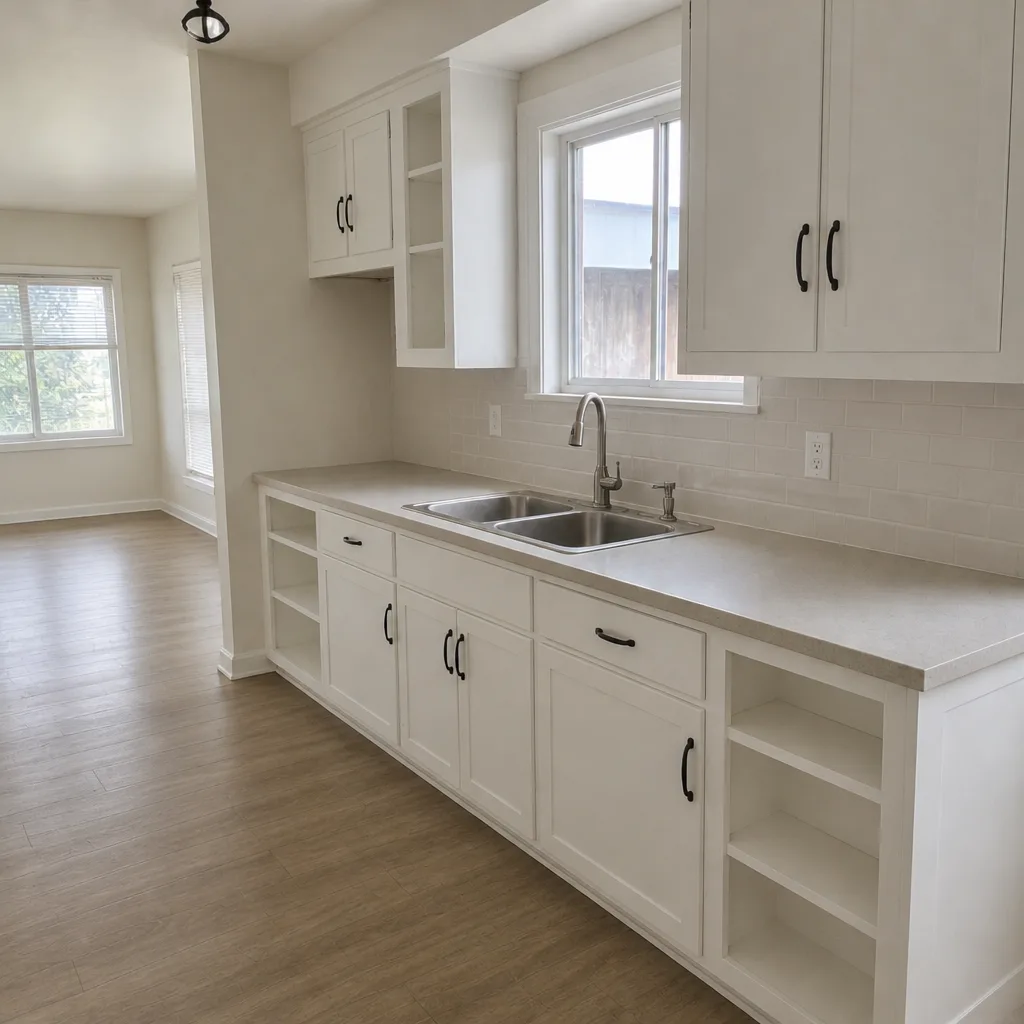 After
Common Mistakes to Avoid
- Setting a backsplash before the countertops. The counter template shifts every seam, and your finished tile has to come out. Wait until the counter is in and sealed.
- Painting cabinets without degreasing first. Kitchen grease is invisible until your new paint fails to bond. Degrease, sand, prime, then paint.
- Adding an outlet or circuit without a permit. In Huntington Beach, that outlet will show up at resale, and the remediation costs more than the licensed install would have. This is the $1,200 savings versus $8,000 remediation gap in one decision.
- Cutting into a wall before checking what’s load-bearing. A stud finder doesn’t tell you that. A structural engineer does, and the permit office will ask for one.
- Ordering cabinets before appliances are confirmed. The fridge opening is the most common near-miss we see in Huntington Beach kitchens. Confirm the appliance, then order the cabinet.
- Skipping the substrate on a tile install. Cement board substrate isn’t optional. Setting tile on drywall in a wet area leads to failure within a year.
- Doing the work yourself to “save the markup” without comparing the line items. Sometimes the contractor price reflects the guarantee, the permit, and the crew insurance. Sometimes it doesn’t. Get the written scope and compare.
When to Call a Professional
Call a professional any time a mistake would require a permit, a licensed trade, or a structural engineer to fix. That includes moving a gas line, adding or relocating an electrical outlet, cutting into a load-bearing wall, waterproofing a wet area from scratch, running new plumbing lines, and installing new kitchen ventilation that requires a wall or roof penetration. It also includes any task where the time you’ll spend learning the trade would cost more than the trade itself; most homeowner electrical mistakes fall in this bucket.
Penhallow Remodeling Huntington Beach offers free estimates in Huntington Beach, call (888) 329-8145. Every estimate is a written price before any work starts, backed by the 365-Day Done Right Promise and a live person answering the phone 24/7.
Frequently Asked Questions
Painting cabinets, swapping hardware, replacing a faucet, hanging shelves into studs, caulking and re-grouting, and installing a backsplash over sound substrate are safe for a motivated homeowner. The test is reversibility: if undoing a mistake requires opening a wall or pulling a permit, hire it out. Call (888) 329-8145 if you want a written second opinion on where to draw the line.
Yes for any new electrical circuit, gas line work, plumbing relocation, or structural change. Cosmetic work (paint, hardware, tile over existing substrate, faucet swap on existing supply) doesn’t require one. California’s owner-builder rule lets you pull a permit yourself on your primary residence, but the work still has to pass inspection and be disclosed at sale. Call us for a written scope that shows which phases need permits.
On cosmetic work, most Huntington Beach homeowners save $1,200 – $4,000 doing paint, hardware, backsplash, and faucet themselves. On electrical, plumbing, and structural work, the savings typically disappear once you account for permits, inspection corrections, and the risk of unpermitted work at resale. A realistic range for a full kitchen remodel in Huntington Beach is $18,000 – $55,000 depending on layout, cabinet line, and countertop material. Call (888) 329-8145 for a written line-item price you can compare against your own work.
Not with us. Every Penhallow Remodeling Huntington Beach project gets a written price before any work starts, so the number on day one is the number on the invoice. On the DIY side, the equivalent is the written scope you build before you buy materials; the change orders come from the project you didn’t plan, not the work itself. Call (888) 329-8145 for a written estimate.
A cosmetic refresh (paint, hardware, backsplash) runs 1 – 2 weeks. A full kitchen with cabinet replacement and new countertops runs 6 – 10 weeks depending on the cabinet line and inspection scheduling through the city. The permits, not the labor, are usually the long pole. Our scheduling gives every job a defined arrival window, so you know when the crew is coming and what’s happening next.
Penhallow Remodeling Huntington Beach backs every project with the 365-Day Done Right Promise: if the work fails inside the guarantee window, we come back and fix it at no charge, and the return visit is free. That’s the piece DIY can’t match. If your own paint peels in six months, you’re the one sanding it back down. Call (888) 329-8145 for a written guarantee on your next project.
The Bottom Line

The safe DIY tasks in a Huntington Beach kitchen all share the same trait: mistakes are cheap and reversible. The unsafe ones all share the opposite: fixing the mistake costs more than hiring out would have cost you on day one. Paint, hardware, shelf-hanging, faucet swaps, and tile over sound substrate are yours if you want them. Electrical, gas, plumbing relocation, load-bearing walls, and wet-area waterproofing belong to a licensed trade, and California’s owner-builder rule doesn’t change the cost of getting it wrong. Get a written scope, build a sequence, and hire out anything that requires a permit to fix. That’s the whole strategy.
Ready to get a written number before you commit? Call (888) 329-8145 for a free estimate. A live person answers 24/7, every estimate is a written price before any work starts, and every project is backed by the 365-Day Done Right Promise.
Written by the team at Penhallow Remodeling Huntington Beach.