Free written scope consultation - allowances, timeline, and change-order rules on paper before a single trade is scheduled
CWS Driveway & Pavers: The Huntington Beach Owner’s Guide
We install CWS-compatible driveway and paver systems for Huntington Beach homeowners, with paver driveway work typically running $7,000 – $18,000 and concrete driveway installation at $4,500 – $12,000 depending on square footage, base prep and paver line. If you need a full replacement rather than a repair, driveway replacement in Huntington Beach usually lands between $5,000 and $14,000. That’s a written number, not a ballpark.
Most owners don’t discover a paver problem all at once. It starts with a handful of loose units near the garage apron, or a low spot that holds water after the first winter rain. Then the sand joints start washing out along the curb line, and by the second season there’s a visible dip where the driveway meets the street. That’s the moment the phone usually rings.
We’re an independent service provider, not affiliated with CWS. We work with the system you already own and quote the fix before anyone touches a paver.
Which CWS Models This Applies To
CWS paver systems show up under a few family lines, and the one that matters most for compatibility is the nominal size and thickness of the unit itself. Standard interlocking pavers run 60mm thick for driveways and 80mm for heavier traffic applications. If your existing units measure 60mm and you replace a patch with 80mm stock, the repaired section will sit proud of its neighbors and rock under a tire within a season. Measure before you order.
The other thing to check is the laying pattern. CWS systems are commonly laid in herringbone or running bond, and a mismatched repair pattern is visible from the street even when the color match is perfect. Photograph the pattern at high noon, when shadow is minimal, so the match can be confirmed before materials are ordered.
Color lots matter too. Concrete pavers are tinted in batches, and a 2021 lot won’t match a 2025 lot of the same nominal color name. That’s not a defect, it’s how pigmented concrete works. When a repair patch is small, we often recommend pulling the same units from an out-of-the-way corner of the driveway and using new stock there instead.
The OEM-versus-aftermarket call is different for pavers than it is for cabinetry or fixtures. Paver systems don’t carry the same model-number lock-in as a cabinet line, so quality aftermarket equivalents are usually a reasonable choice when the CWS color is discontinued. If you also have KraftMaid, Cambria or Silestone in the house, those do carry model-specific fit requirements, and we flag that when we quote.
Styles & brands we work with
- Kitchen remodeling
- Bathroom remodeling
- Home additions & ADU
- Roofing
- Windows & doors
- Driveway & pavers
- Fence
Signs Your CWS Driveway & Pavers Is Failing
Huntington Beach driveways live under a specific set of stresses that other markets don’t share. The marine layer keeps the surface damp through most mornings and the inland thermal swing dries it hard by mid-afternoon. That wet-dry cycle, repeated over years, is what drives most of the failures we see. Here’s what to watch for:
- Loose pavers near the garage apron. Usually the base has settled or the edge restraint gave way, not the paver itself. Once a unit rocks, the sand joint next to it drains into the void and the failure spreads.
- Sand joints washing out after rain. Polymeric joint sand erodes when water drains across the surface instead of away from it. That points to a grading or slope issue more than a sand problem.
- Standing water in a low spot. Water pooling on pavers always means the subbase wasn’t compacted or crowned correctly. Leaving it will soften the base and loosen the whole field.
- Visible dip where the driveway meets the street. This is typically base failure at the apron or a drainage issue from the street side. It’s also the most common place for trip hazards to develop.
- Efflorescence (white haze) that keeps returning. A white salt haze that comes back after every wet season suggests moisture moving up through the concrete from the base. That’s worth checking before it becomes a structural problem.
Small movement in the first year after installation is normal. Movement that starts after five years is a signal, and it’s worth getting eyes on it before the next rainy season.
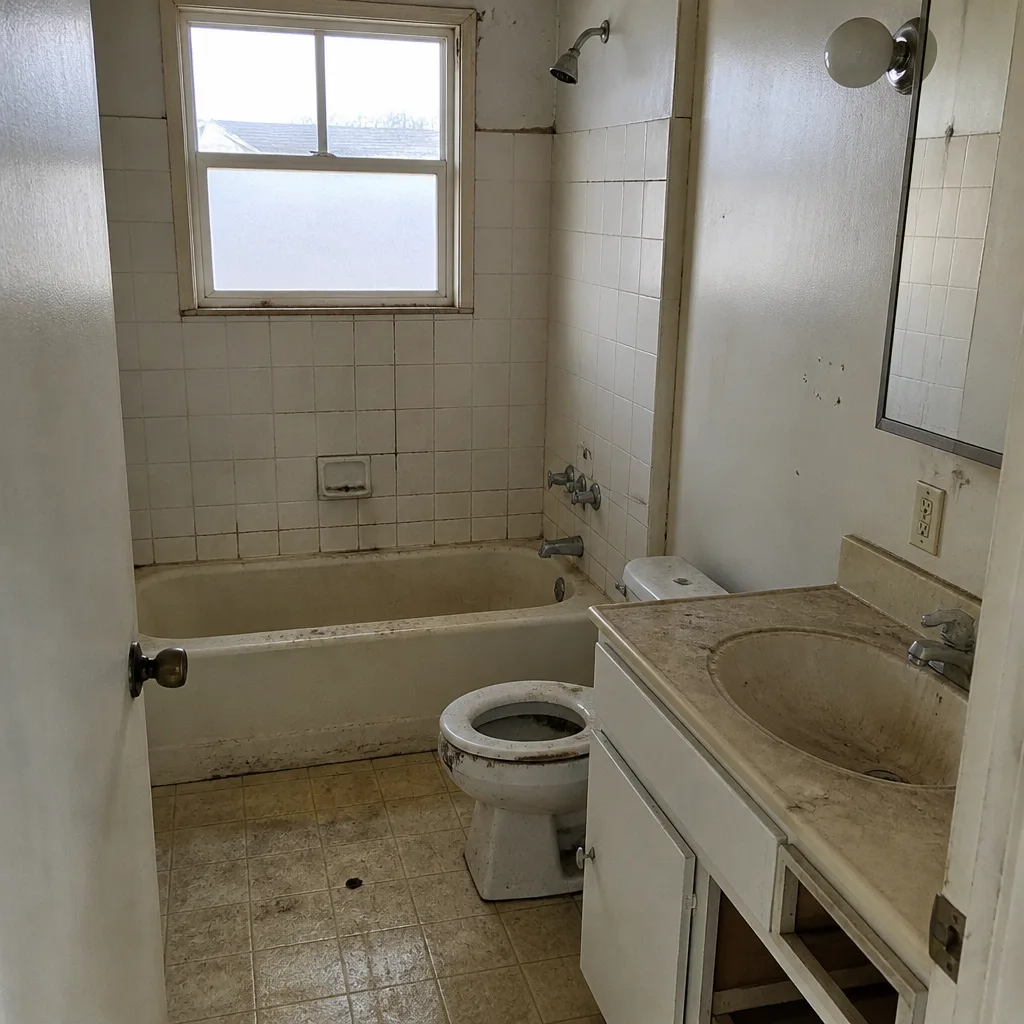
See the difference
 Before
 After
 Before
 After
 Before
 After
Replacement Cost & What’s Included
Installed paver driveway work in Huntington Beach typically runs $7,000 – $18,000. Concrete driveway installation runs $4,500 – $12,000. A full driveway replacement, which includes demo and haul-away of the existing surface, is $5,000 – $14,000. Driveway sealing, which is useful but not always necessary, runs $250 – $700.
What drives the range:
- Square footage. A two-car apron is roughly half the cost of a full driveway with a turn-around.
- Base prep. If the existing subbase is sound, we can reuse it. If it needs recompaction or replacement, that’s the biggest single variable in any driveway quote.
- Paver thickness and line. 60mm stock versus 80mm stock, and the specific CWS family or equivalent, both move the number.
- Drainage work. If the grading isn’t right, it gets fixed first, and that’s a line item on the quote, not a surprise.
Every quote from us is a written price before any work starts. Demo day doesn’t change the number. If we find base damage we didn’t see on the first visit, we stop, explain it in writing, and give you a revised number to approve before we continue. Nobody touches the driveway on a verbal yes.
Workmanship on the install is covered by our 365-Day Done Right Promise. If it fails inside the year, we come back and fix it at no charge. If a repair fails, the return visit is free: no service call, no re-inspection fee.
DIY or Call Us?
Paver work is often described as a good weekend project. For a single-unit replacement or a cosmetic touch-up, that’s reasonable. For anything involving the base or the drainage, it isn’t.
What you can safely check on your own: photograph the pattern, measure the paver thickness, note where water pools, and pull up a single loose unit (if it comes up easily) to look at the sand condition underneath. That information is genuinely useful when you call.
What goes wrong with DIY: the base is the whole job. A paver field laid on an uncompacted base will look fine for a season and then move. Replacing pavers without a proper edge restraint is the second most common mistake, and polymeric joint sand installed over a damp joint is the third. If the base isn’t right, everything above it will fail no matter how well the top course went in.
Also worth noting: we don’t stock parts and we don’t carry pavers on a truck. We order what your CWS system needs, deliver it to the site, and install it to spec. That means your job is scheduled properly, not fitted in around whatever happens to be on hand.
Call (888) 329-8145 to schedule a free estimate. We’ll measure the system, check the base, and give you a written number before anything is ordered.
FAQs
A properly installed concrete paver driveway typically lasts 25 to 30 years in a coastal Southern California climate. The paver itself usually outlasts the joint sand and the edge restraint, both of which need refreshing periodically. Driveway sealing every 3 to 5 years extends the useful life of the surface finish.
Yes, in most cases where the base is sound and the paving pattern can be matched. A localized repair usually involves lifting the affected pavers, correcting the base under the failed area, and relaying. That includes matching the color lot if stock is still available, and matching the pattern so the repair doesn’t read as a patch on the surface. If the base has failed across the whole field, a full replacement is often more economical than piecemeal repairs.
A localized repair typically takes one day on site. A full driveway replacement usually runs two to four days depending on square footage, base condition and whether drainage work is included. We give you an arrival window in writing before the first day, and we keep to it.
We work with quality aftermarket equivalents when the original CWS line is no longer available, and we confirm color and dimension against your existing units before ordering. If the match isn’t close enough to be invisible, we’ll show you that before you commit to a number, so you can decide whether a full replacement makes sense instead of a partial repair.
Call (888) 329-8145 to schedule your free estimate. We answer the phone 24/7 with a live person, not a voicemail prompt.
Written by the team at Penhallow Remodeling Huntington Beach, serving Huntington Beach and nearby areas.